
Olive Garden salad is one of the most popular restaurant-style dishes, loved for its crisp texture and bold Italian flavors. This article dives into everything you need to know about making the perfect Olive Garden salad at home. From ingredients and preparation to expert tips and variations, you will learn how to recreate this refreshing dish with ease while keeping the taste authentic and satisfying.
JUMP TO
Table of Contents
What Makes Olive Garden Salad So Popular
Signature Flavor That Stands Out
Olive Garden salad is known for its balanced flavor profile. The tangy Italian dressing blends beautifully with fresh vegetables, while olives and pepperoncini add a slightly salty and zesty kick. Because of this harmony, each bite feels both refreshing and satisfying.
Fresh Ingredients That Make a Difference
The foundation of Olive Garden salad lies in its fresh ingredients. Crisp iceberg lettuce, juicy tomatoes, and thinly sliced onions provide a clean base. Meanwhile, black olives and pepperoncini peppers enhance the taste with bold accents.
Restaurant Style Experience at Home
Many people love Olive Garden salad because it feels like a restaurant-quality dish. When prepared correctly, the salad is evenly coated with dressing and perfectly tossed, creating that signature look and taste.
Ingredients for the Perfect Olive Garden Salad Recipe
Essential Ingredients
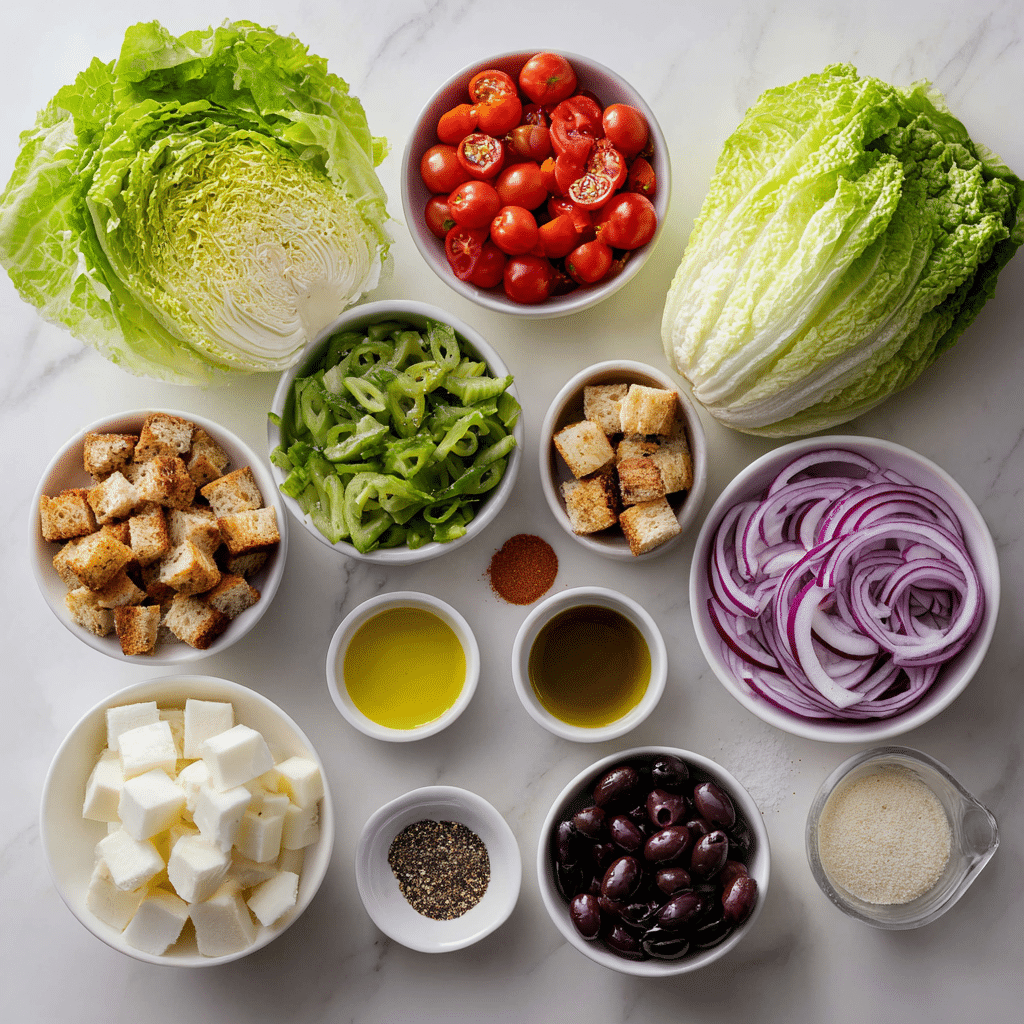
To make an authentic Olive Garden salad, you need simple ingredients that work together seamlessly. Iceberg lettuce serves as the main base, while romaine adds texture. Cherry tomatoes bring sweetness, and red onions add a mild sharpness. Black olives and pepperoncini deliver the signature tangy flavor. Croutons provide crunch, and grated Parmesan cheese adds a rich finish.
Classic Italian Dressing
The dressing is what defines Olive Garden salad. It typically combines olive oil, white vinegar, lemon juice, garlic powder, Italian seasoning, sugar, salt, and pepper. When whisked together properly, it creates a smooth and flavorful blend that coats every ingredient evenly.
Optional Additions
While the traditional version is simple, you can customize your Olive Garden salad by adding grilled chicken, shrimp, avocado, or cucumbers. These additions make the salad more filling and versatile.
Step by Step Guide to Making Olive Garden Salad
Preparing the Vegetables
Start by washing and drying all vegetables thoroughly. Chop the iceberg lettuce into bite-sized pieces and combine it with romaine for added crunch. Slice the onions thinly to ensure they do not overpower the other flavors.
Making the Dressing
In a bowl, combine olive oil, vinegar, lemon juice, and seasonings. Whisk until the mixture is smooth and well blended. This step ensures that the dressing is evenly distributed throughout the salad.
Assembling the Salad
Place all the vegetables into a large bowl. Add black olives, pepperoncini, and croutons. Then drizzle the dressing evenly over the top.
Tossing and Serving
Gently toss the salad using tongs so every ingredient is coated. Finish by sprinkling grated Parmesan cheese on top just before serving.
Tips to Make Olive Garden Salad Taste Authentic
Use Chilled Ingredients
Cold ingredients make a noticeable difference. Keeping the lettuce and dressing chilled helps recreate the refreshing restaurant-style experience.
Avoid Overdressing
Although Olive Garden salad is known for its flavorful coating, too much dressing can make it soggy. Start with a small amount and adjust as needed.
Slice Ingredients Evenly
Uniform slices improve both the texture and presentation. This simple step enhances the overall quality of the dish.
Add Dressing Just Before Serving
To maintain crispness, always add the dressing right before serving. This keeps the salad fresh and crunchy.
Variations of Olive Garden Salad You Can Try
Healthy Version
For a lighter option, use a reduced-fat dressing and fewer croutons. This keeps the flavor while lowering calorie content.
Protein Packed Option
Adding grilled chicken or shrimp turns Olive Garden salad into a complete meal. This variation is perfect for lunch or dinner.
Vegan Friendly Version
To make the salad vegan, skip the Parmesan cheese and use a plant-based dressing. The result is still delicious and satisfying.
Gluten Free Option
Replace regular croutons with gluten-free alternatives or roasted chickpeas to maintain the crunch.
Nutritional Information of Olive Garden Salad
Olive Garden salad is generally considered a light dish. A typical serving contains around 150 to 200 calories, about 12 grams of fat, 10 grams of carbohydrates, and 3 grams of protein. Sodium content can be higher due to the dressing and olives, so adjusting portions can help maintain balance.
Common Mistakes to Avoid
Using Warm Ingredients
Warm ingredients can affect the texture and flavor. Always use fresh and chilled components.
Skipping Key Ingredients
Pepperoncini and olives are essential for achieving the authentic Olive Garden salad taste. Omitting them changes the overall flavor profile.
Overmixing the Salad
Toss the salad gently to avoid bruising the lettuce and losing its crisp texture.
Using Low Quality Dressing
Since the dressing is the heart of the salad, using a well-balanced and flavorful mix is crucial.
How to Store Olive Garden Salad
Refrigeration Tips
Store leftover Olive Garden salad in an airtight container in the refrigerator for up to two days. For best results, keep the dressing separate until ready to serve.
Preventing Sogginess
If the salad is already dressed, placing a paper towel in the container can help absorb excess moisture and maintain texture.
Creative Ways to Use Leftovers
Leftover Olive Garden salad can be used in wraps, sandwiches, or as a topping for grain bowls, making it a versatile option.
Frequently Asked Questions
What dressing is used in Olive Garden salad
Olive Garden salad uses a tangy Italian dressing made from oil, vinegar, and a blend of herbs and seasonings.
Can I make Olive Garden salad ahead of time
Yes, you can prepare the ingredients in advance, but it is best to add the dressing just before serving.
What lettuce is best for Olive Garden salad
Iceberg lettuce is commonly used, often combined with romaine for added texture.
How do I make it taste like the restaurant version
Using fresh ingredients, chilled components, and properly balanced dressing helps achieve the authentic flavor.
Conclusion
Olive Garden salad is a simple yet flavorful dish that brings restaurant-quality taste into your kitchen. With fresh vegetables, tangy dressing, and the right preparation techniques, you can easily recreate this classic favorite at home. Whether you enjoy it as a side or turn it into a full meal, Olive Garden salad remains a refreshing and satisfying choice for any occasion.
PrintOlive Garden Salad Recipe That Tastes Better Than Restaurant

Olive Garden salad is a crisp and refreshing Italian-style salad made with fresh lettuce, vegetables, tangy dressing, and crunchy toppings, perfect for recreating the restaurant experience at home.
- Prep Time: 15 minutes
- Cook Time: 0 minutes
- Total Time: 15 minutes
- Yield: 4 servings
Ingredients
- 1 large head iceberg lettuce, chopped
- 1 cup romaine lettuce, chopped
- 1 cup cherry tomatoes
- 1/2 red onion, thinly sliced
- 1/2 cup black olives
- 1/2 cup pepperoncini peppers
- 1 cup croutons
- 1/4 cup grated Parmesan cheese
- 1/3 cup olive oil
- 2 tablespoons white vinegar
- 1 tablespoon lemon juice
- 1 teaspoon garlic powder
- 1 teaspoon Italian seasoning
- 1 teaspoon sugar
- Salt and pepper to taste
Instructions
- Wash and thoroughly dry all vegetables.
- Chop iceberg and romaine lettuce into bite-sized pieces and place in a large bowl.
- Add cherry tomatoes, sliced red onion, black olives, and pepperoncini.
- In a separate bowl, whisk together olive oil, white vinegar, lemon juice, garlic powder, Italian seasoning, sugar, salt, and pepper until well combined.
- Pour the dressing over the salad just before serving.
- Add croutons and toss gently to coat all ingredients evenly.
- Top with grated Parmesan cheese and serve immediately.
Notes
- Use chilled ingredients for the best flavor and texture.
- Add dressing just before serving to prevent sogginess.
- Slice onions thinly to avoid overpowering the salad.
- Adjust dressing quantity based on preference.
- Store leftovers without dressing for better freshness.
Nutrition
- Serving Size: 1 serving
- Calories: 180
- Sugar: 3g
- Sodium: 500mg
- Fat: 12g
- Saturated Fat: 2g
- Unsaturated Fat: 9g
- Trans Fat: 0g
- Carbohydrates: 10g
- Fiber: 2g
- Protein: 3g
- Cholesterol: 5mg