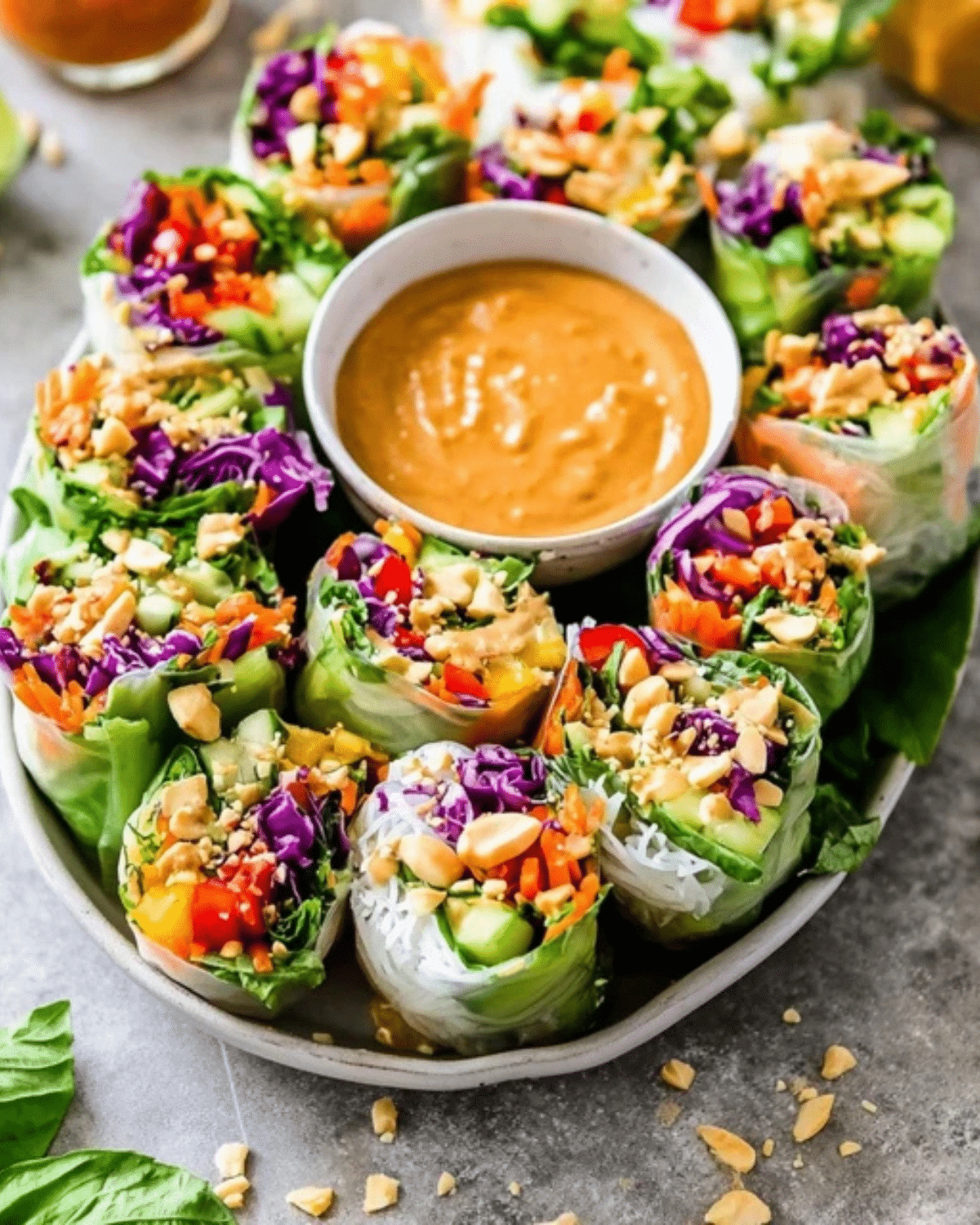
The best Spring Rolls with Peanut Sauce are fresh, colorful, and packed with flavor, making them a go-to dish for warm weather, light lunches, or impressive appetizers. Right from the first bite, these rolls deliver crisp vegetables, tender noodles, and fragrant herbs wrapped in delicate rice paper, all dipped into a creamy, savory peanut sauce.
In this article, you’ll discover what makes spring rolls truly great, which ingredients matter most, and how to roll them neatly without stress. Whether you’re new to homemade spring rolls or looking to perfect your technique, this guide covers everything you need to know.
JUMP TO
Table of Contents
Why These Are the Best Spring Rolls with Peanut Sauce
Spring rolls may look simple, but the best ones rely on balance. From texture to flavor, every element plays a role in creating a roll that tastes fresh, satisfying, and never heavy.
What Makes Spring Rolls Fresh and Light
Unlike fried rolls, fresh spring rolls use raw or lightly cooked vegetables, which keeps them crisp and refreshing. Rice paper wrappers are thin and delicate, allowing the fillings to shine rather than overpowering them.
Because the ingredients are not greasy, the rolls feel light yet filling. This makes them perfect for spring and summer meals, especially when served chilled or at room temperature.
Why Peanut Sauce Is the Perfect Pairing
Peanut sauce adds richness that balances the fresh vegetables. Its creamy texture contrasts beautifully with the crunch inside the rolls. At the same time, the combination of peanut butter, soy sauce, and a touch of sweetness creates deep, savory flavor.
According to Food Network, peanut-based sauces work especially well with fresh herbs and rice noodles because they add umami without masking natural flavors.
Flavor, Texture, and Balance Explained
The best spring rolls with peanut sauce combine multiple textures in one bite. Crisp carrots, cool cucumber, tender noodles, and soft rice paper create contrast. Meanwhile, herbs like cilantro and mint add freshness that keeps the rolls from tasting bland.
When dipped into peanut sauce, everything comes together. The sauce coats each bite, enhancing flavor while keeping the rolls light and satisfying.
Ingredients Needed for the Best Spring Rolls with Peanut Sauce
The secret to the best Spring Rolls with Peanut Sauce lies in using fresh, balanced ingredients. While spring rolls are flexible, choosing the right components ensures great texture, clean flavor, and a roll that holds together beautifully.
Fresh Vegetables That Work Best in Spring Rolls
Freshness matters more here than anything else. Crisp vegetables add crunch and contrast, which keeps the rolls light and refreshing.
Common vegetable choices include shredded carrots, thinly sliced red bell peppers, cucumber matchsticks, and purple cabbage. These vegetables not only taste great but also add color, making the rolls visually appealing. Lettuce leaves, such as butter lettuce or romaine, help protect the rice paper and keep fillings in place.
Because vegetables release moisture, pat them dry before assembling. This small step prevents soggy rolls and keeps the rice paper firm.
Choosing the Right Rice Paper Wrappers
Rice paper wrappers are delicate, yet forgiving once you understand how they work. Always use round Vietnamese-style rice paper made from rice and tapioca. These wrappers soften quickly and remain flexible without tearing when handled properly.
Warm water works best for softening rice paper. Dip each wrapper briefly, then let it rest on a flat surface. As it sits, it continues to soften, making it easier to roll without ripping.
Ingredients for a Creamy Peanut Dipping Sauce
The peanut sauce is what truly elevates the dish. A classic sauce combines creamy peanut butter, soy sauce, lime juice, garlic, and a touch of sweetness. Some recipes add a little chili paste for heat, while others use coconut milk or water to adjust thickness.
According to Bon Appétit, balancing salty, sweet, and acidic elements is key to a peanut sauce that complements fresh rolls instead of overpowering them.
How to Make the Best Spring Rolls with Peanut Sauce
Once the ingredients are prepped, assembling spring rolls becomes quick and enjoyable. The process is simple, but technique makes all the difference.
Preparing Vegetables and Herbs
Start by washing and drying all vegetables thoroughly. Slice everything thinly so the rolls are easy to bite through. Cook rice noodles according to package instructions, then rinse them under cold water to stop cooking and remove excess starch.
Fresh herbs such as cilantro and mint should be left whole or roughly torn. Their aroma and brightness are essential to achieving the best spring rolls with peanut sauce.

How to Soften Rice Paper Without Tearing
Fill a wide bowl with warm water. Dip one rice paper wrapper into the water for just a few seconds. It should still feel slightly firm when removed. Lay it flat on a clean surface and wait about 20 seconds. During this time, the wrapper softens fully.
Over-soaking causes rice paper to tear, while under-soaking makes it crack. Timing is crucial, but after a few tries, it becomes second nature.
Rolling Spring Rolls Like a Pro
Place lettuce on the lower third of the wrapper, followed by noodles, vegetables, and herbs. Fold the bottom edge over the filling, then fold in the sides. Roll tightly but gently, keeping tension even to avoid tearing.
As you roll, press lightly to keep the filling compact. A tight roll not only looks better but also holds together when dipped.
Mixing a Smooth Peanut Sauce
Whisk all peanut sauce ingredients in a bowl until smooth. If the sauce feels too thick, add warm water a tablespoon at a time. Taste and adjust seasoning as needed.
A well-made peanut sauce should be creamy, slightly sweet, and savory, with just enough acidity to brighten the flavor.
Tips for Perfect Spring Rolls Every Time
Even though spring rolls are simple, small details can make or break the final result.
How to Prevent Soggy Spring Rolls
Moisture is the biggest enemy. Always dry vegetables and noodles well before assembling. Also, avoid stacking finished rolls directly on top of each other, as this causes sticking and sogginess.
Make-Ahead and Storage Tips
Spring rolls are best eaten fresh, but they can be made a few hours ahead. Cover them with a damp paper towel and plastic wrap to prevent drying. Store peanut sauce separately and stir before serving.
Serving Ideas for Parties and Meals
Serve spring rolls cut in half for appetizers or whole for light meals. Pair them with extra peanut sauce and fresh lime wedges for added brightness.
Variations of the Best Spring Rolls with Peanut Sauce
One of the reasons the best Spring Rolls with Peanut Sauce are so popular is their flexibility. With a few simple swaps, you can tailor them to different diets, preferences, and occasions without losing flavor or freshness.
Vegan and Vegetarian Spring Roll Options
Vegetable-based spring rolls are naturally vegetarian, making them ideal for plant-based diets. To boost protein, add baked tofu or edamame. Tofu works especially well because it absorbs flavor while keeping the rolls filling.
For a fully vegan peanut sauce, use maple syrup instead of honey and double-check that your soy sauce is vegan-friendly. The result stays creamy, rich, and satisfying without any animal products.
Adding Shrimp, Chicken, or Tofu
If you prefer protein-rich rolls, cooked shrimp is a classic option. Slice it in half lengthwise so it lies flat and rolls neatly. Grilled or shredded chicken also works well, especially when lightly seasoned.
Tofu lovers can pan-sear tofu strips for extra texture. These protein options add substance while keeping the rolls light and balanced.
Gluten-Free and Low-Calorie Adjustments
Rice paper wrappers are naturally gluten-free, making spring rolls a great option for gluten-sensitive eaters. Just be sure to use gluten-free soy sauce in the peanut sauce.
For a lower-calorie version, reduce noodles and increase vegetables. This keeps the rolls crisp and fresh while cutting back on carbs without sacrificing volume or flavor.
Best Spring Rolls with Peanut Sauce FAQs
Can Spring Rolls Be Made Ahead of Time?
Yes, spring rolls can be made a few hours ahead. Cover them with a damp paper towel and plastic wrap to prevent drying. However, they taste best when eaten the same day.
Why Is My Rice Paper Tearing?
Rice paper usually tears when over-soaked or handled too roughly. Dip it briefly in warm water and allow it to soften naturally on a flat surface before filling.
How Long Does Peanut Sauce Last?
Peanut sauce lasts up to five days when stored in an airtight container in the refrigerator. Stir well before serving, as separation is normal.
What Can I Use Instead of Peanut Butter?
If you have allergies, almond butter or sunflower seed butter are great alternatives. Both create a creamy sauce with a slightly different, but still delicious, flavor.
Conclusion: Why You’ll Love the Best Spring Rolls with Peanut Sauce
The best Spring Rolls with Peanut Sauce bring together freshness, texture, and bold flavor in one satisfying dish. They’re easy to customize, simple to prepare, and perfect for everything from weeknight meals to party platters.
With crisp vegetables, fragrant herbs, tender noodles, and a rich peanut dipping sauce, these spring rolls offer balance in every bite. Once you master the technique, they become a reliable, crowd-pleasing favorite you’ll make again and again.
PrintThe Best Spring Rolls with Peanut Sauce for Fresh, Easy Meals

Fresh and light spring rolls filled with crisp vegetables, rice noodles, and herbs, served with a creamy, savory peanut dipping sauce that balances flavor and texture perfectly.
- Prep Time: 25 minutes
- Cook Time: 5 minutes
- Total Time: 30 minutes
- Yield: 12 spring rolls
- Category: Appetizer
- Method: No-Cook
- Cuisine: Asian
- Diet: Vegetarian
Ingredients
- 12 rice paper wrappers
- 2 cups shredded carrots
- 1 cup thinly sliced cucumber
- 1 cup sliced red bell pepper
- 2 cups butter lettuce leaves
- 4 oz rice vermicelli noodles, cooked
- 1/2 cup fresh cilantro leaves
- 1/2 cup fresh mint leaves
- 1/2 cup creamy peanut butter
- 3 tablespoons soy sauce
- 1 tablespoon lime juice
- 1 tablespoon honey or maple syrup
- 1 clove garlic, minced
- 2–4 tablespoons warm water (to thin sauce)
Instructions
- Prepare all vegetables by washing, drying, and slicing them into thin strips.
- Cook rice noodles according to package instructions, rinse with cold water, and drain well.
- Fill a wide bowl with warm water and briefly dip one rice paper wrapper until slightly softened.
- Lay the wrapper flat and allow it to soften completely.
- Place lettuce on the lower third, then add noodles, vegetables, and herbs.
- Fold the bottom over the filling, fold in the sides, and roll tightly.
- Repeat with remaining wrappers and fillings.
- Whisk peanut butter, soy sauce, lime juice, honey, garlic, and water until smooth.
- Serve spring rolls immediately with peanut dipping sauce.
Notes
- Do not over-soak rice paper to avoid tearing.
- Pat vegetables dry to prevent soggy rolls.
- Adjust peanut sauce thickness with warm water.
- Spring rolls are best enjoyed fresh the same day.
Nutrition
- Serving Size: 1 spring roll
- Calories: 120 kcal
- Sugar: 4 g
- Sodium: 230 mg
- Fat: 6 g
- Saturated Fat: 1 g
- Unsaturated Fat: 5 g
- Trans Fat: 0 g
- Carbohydrates: 14 g
- Fiber: 2 g
- Protein: 4 g
- Cholesterol: 0 mg