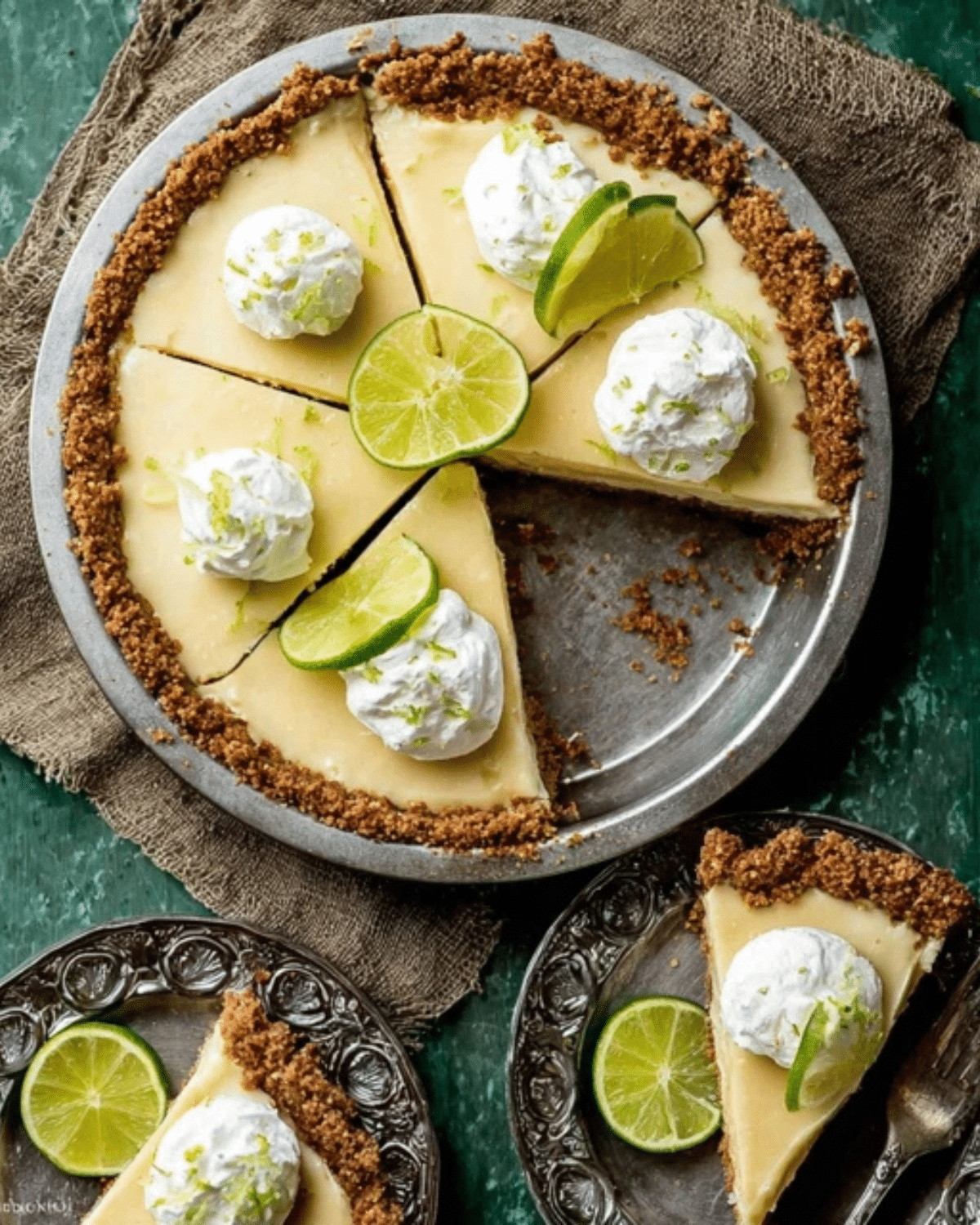
Key lime pie is one of those desserts that never goes out of style, and honestly, it’s easy to see why. With its creamy This key lime pie recipe is a timeless American dessert that delivers bold citrus flavor wrapped in a smooth, creamy filling and a buttery graham cracker crust. Known for its refreshing taste and simple preparation, this classic lime dessert has earned its place at summer cookouts, holiday tables, and family gatherings across the United States. In this complete guide, you’ll learn the history behind the pie, how to choose the right ingredients, step-by-step preparation tips, common mistakes to avoid, creative variations, storage advice, nutrition details, and answers to the most frequently asked questions.
JUMP TO
Table of Contents
What Makes This Lime Dessert a Timeless American Favorite
Some desserts come and go, but this citrus custard pie has remained popular for decades. Its appeal lies in simplicity, balance, and a flavor profile that feels indulgent yet refreshing.
The Origins of This Florida-Inspired Pie
The story of this dessert begins in the Florida Keys, where fresh limes were abundant and refrigeration was once unreliable. Local cooks discovered that mixing lime juice with sweetened condensed milk created a thick, creamy filling without the need for complicated equipment. Egg yolks were later added to improve structure and texture, giving rise to the version we recognize today. Over time, the recipe spread beyond Florida and became a national favorite.
Why It Stands Out Among Citrus Desserts
Unlike lemon pies that lean heavily on sugar, this recipe offers a sharper citrus edge. Lime juice brings brightness and acidity, while condensed milk softens the flavor and adds richness. The contrast between the tangy filling and the crunchy crust creates a satisfying bite that keeps people coming back for more.
Understanding the Sweet-and-Tangy Balance
The success of this dessert depends on balance. Too much sugar masks the citrus, while too much acid overwhelms the palate. When prepared correctly, the filling sets into a silky custard that feels light but still indulgent. This balance is why the dessert works equally well after a heavy meal or as a standalone treat.
Ingredients for a Perfect Homemade Lime Pie
While the ingredient list is short, quality and proportions matter.

Key Limes vs Regular Limes
Traditional recipes use key limes, which are smaller, more aromatic, and slightly more acidic than Persian limes. Their juice provides a distinctive flavor that many associate with authenticity. However, regular limes are widely available and still produce excellent results when used fresh. The most important factor is avoiding bottled juice, which lacks brightness and depth.
Filling Ingredients That Matter Most
Sweetened condensed milk is essential because it provides sweetness and reacts with lime juice to thicken the filling naturally. Egg yolks add richness and help the custard set during baking. Fresh lime juice delivers acidity and aroma, forming the backbone of the flavor.
Crust Essentials for Structure and Flavor
Graham crackers are the classic choice for the crust. When combined with melted butter and a small amount of sugar, they create a sturdy base with a lightly toasted flavor. Pressing the crust firmly into the pan ensures clean slices when serving.
Optional Additions for Enhanced Taste
Lime zest intensifies the citrus aroma without increasing acidity. A pinch of salt enhances overall flavor, while a small splash of vanilla can soften the edges of the citrus without overpowering it.
Step-by-Step Instructions for a Smooth, Set Filling
This recipe is approachable for beginners, but attention to detail makes a noticeable difference.
Preparing the Graham Cracker Crust
Crush the graham crackers into fine crumbs, then mix with melted butter and sugar until evenly coated. Press the mixture firmly into the bottom and sides of a pie dish. Pre-baking the crust for a few minutes helps it hold together and prevents sogginess once the filling is added.
Mixing the Creamy Lime Filling
Whisk egg yolks until smooth, then blend in the condensed milk. Slowly add the lime juice while stirring gently. As the juice incorporates, the mixture thickens naturally. Avoid overmixing, as excess air can cause bubbles and uneven texture.
Baking and Cooling the Pie Correctly
Pour the filling into the warm crust and bake until the center is just set with a slight jiggle. Overbaking can cause cracks, while underbaking leads to a loose filling. After baking, let the pie cool at room temperature before transferring it to the refrigerator. Chilling for several hours allows the custard to firm up fully.
Common Mistakes and How to Avoid Them
Even a simple dessert can go wrong without proper technique.
Why the Filling Turns Runny
A runny filling usually means the pie was underbaked or not chilled long enough. Accurate measurements also matter, as too much juice can prevent proper setting.
Overbaking vs Underbaking
Overbaking leads to a rubbery texture and surface cracks, while underbaking results in a pie that won’t hold its shape. The ideal doneness is when the edges are set and the center still moves slightly.
Fixing Flavor Imbalances
If the dessert tastes too sweet, increasing the lime juice slightly in the next batch restores balance. If it’s too tart, adding a bit more condensed milk smooths the flavor without masking the citrus.
Creative Variations You Can Try at Home
Once you master the classic version, variations allow you to customize the dessert.
No-Bake Lime Pie Option
A no-bake version replaces eggs with whipped cream for structure. The filling is chilled instead of baked, resulting in a lighter texture that’s perfect for hot weather.
Mini Pies and Dessert Bars
Mini versions are great for parties and portion control. Baking the filling in muffin tins or square pans reduces baking time and makes serving easier.
Dairy-Free and Gluten-Free Alternatives
Coconut condensed milk works well for dairy-free adaptations, adding a subtle tropical note. Gluten-free graham crackers or nut-based crusts provide structure without compromising flavor.
Storage, Freezing, and Serving Tips
Proper handling keeps the dessert fresh and appealing.
Refrigeration Guidelines
Store the pie covered in the refrigerator for up to four days. Cold temperatures help maintain texture and prevent separation.
Freezing Instructions
Wrap the pie tightly in plastic wrap and foil before freezing. It can be frozen for up to one month. Thaw overnight in the refrigerator for best results.
Toppings and Presentation Ideas
Classic toppings include whipped cream and lime zest. Thin lime slices or crushed graham crackers add visual appeal without overwhelming the flavor.
Nutrition Facts and Portion Suggestions
A typical slice contains carbohydrates from the crust and condensed milk, moderate fat, and a small amount of protein from eggs. While it’s an indulgent dessert, smaller portions make it suitable for gatherings and balanced eating.
Frequently Asked Questions
Is key lime pie supposed to be yellow or green?
Traditional key lime pie is pale yellow. Bright green versions usually contain food coloring.
Can I use bottled lime juice for key lime pie?
Fresh lime juice is recommended for the best flavor, as bottled juice lacks the same brightness.
Why does key lime pie thicken without flour or cornstarch?
The acidity of lime juice reacts with condensed milk and egg yolks, naturally thickening the filling.
How long should key lime pie chill before serving?
At least four hours, though overnight chilling produces the cleanest slices.
Conclusion – Why This Key Lime Pie Recipe Never Fails
This key lime pie recipe succeeds because it respects balance, technique, and simplicity. With a creamy custard filling, crisp crust, and refreshing citrus flavor, it’s a dessert that consistently delivers satisfying results. Trusted baking authorities such as Sally’s Baking Addiction and Food Network support the methods and techniques used here, reinforcing why this dessert remains a classic across generations.
PrintKey Lime Pie – Creamy, Tangy & Truly Irresistible

A classic key lime pie with a creamy, tangy lime custard filling and a buttery graham cracker crust, baked to perfection and chilled for clean slices and refreshing flavor.
- Prep Time: 20 minutes
- Cook Time: 25 minutes
- Total Time: 4 hours 45 minutes
- Yield: 8 servings
- Category: Dessert
- Method: Baking
- Cuisine: American
- Diet: Vegetarian
Ingredients
- 1 1/2 cups graham cracker crumbs
- 1/3 cup granulated sugar
- 6 tablespoons unsalted butter, melted
- 1 can (14 ounces) sweetened condensed milk
- 4 large egg yolks
- 1/2 cup fresh lime juice (key limes or regular limes)
- 1 tablespoon lime zest
- 1/4 teaspoon salt
- Whipped cream, for topping (optional)
Instructions
- Preheat the oven to 350°F (175°C).
- In a bowl, mix graham cracker crumbs, sugar, and melted butter until combined.
- Press the mixture firmly into the bottom and sides of a 9-inch pie dish.
- Bake the crust for 8–10 minutes, then remove and let it cool slightly.
- In a large bowl, whisk the egg yolks until smooth.
- Add sweetened condensed milk and mix until fully combined.
- Slowly whisk in fresh lime juice, lime zest, and salt until the filling thickens.
- Pour the filling into the prepared crust.
- Bake for 15–18 minutes, until the center is just set and slightly jiggly.
- Cool at room temperature, then refrigerate for at least 4 hours before serving.
- Top with whipped cream if desired and serve chilled.
Notes
- Use fresh lime juice for the best flavor; bottled juice is not recommended.
- The pie will continue to set as it chills in the refrigerator.
- Do not overbake, as this can cause cracks and a rubbery texture.
- The pie can be made a day ahead for best slicing results.
Nutrition
- Serving Size: 1 slice
- Calories: 420 kcal
- Sugar: 36 g
- Sodium: 210 mg
- Fat: 22 g
- Saturated Fat: 12 g
- Unsaturated Fat: 9 g
- Trans Fat: 0 g
- Carbohydrates: 50 g
- Fiber: 1 g
- Protein: 7 g
- Cholesterol: 115 mg