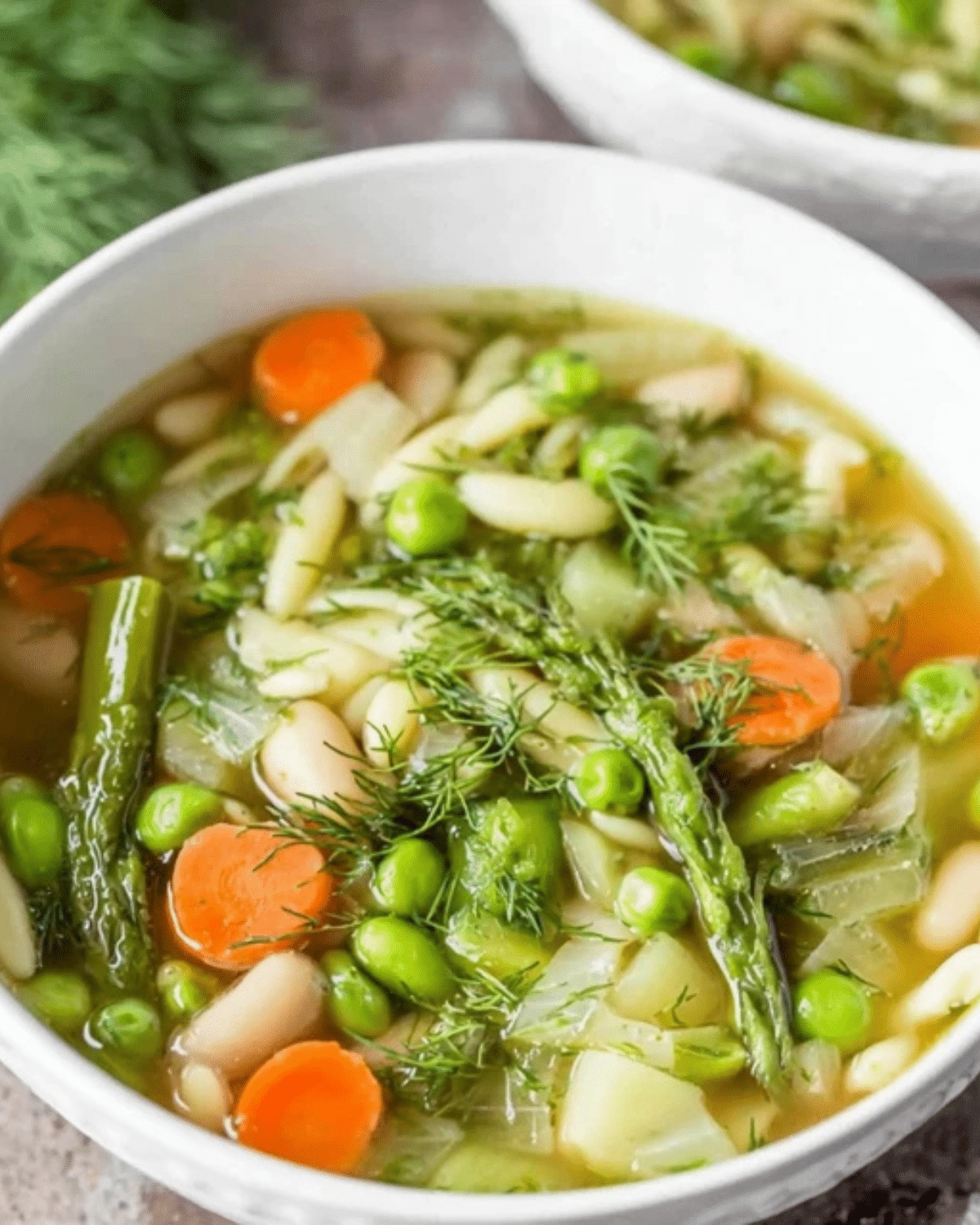
Spring Minestrone Soup is a bright, nourishing take on the classic Italian soup, packed with seasonal vegetables, tender beans, and a light, flavorful broth. Unlike heavier winter versions, this spring-inspired soup feels fresh and vibrant while still offering comfort in every spoonful. It’s the kind of dish that bridges the gap between cozy and refreshing.
What makes Spring Minestrone Soup special is its flexibility. It celebrates fresh produce like asparagus, peas, spinach, and zucchini, allowing natural flavors to shine. The broth stays light, letting the vegetables remain the focus, while still delivering satisfying depth.
This soup is perfect for transitional weather, when you want something warming but not heavy. It works beautifully as a starter, a light lunch, or a wholesome dinner paired with crusty bread. Spring Minestrone Soup proves that healthy, vegetable-forward meals can still feel hearty and comforting.
JUMP TO
Table of Contents
Why Spring Minestrone Soup Is So Popular
Spring Minestrone Soup has grown in popularity because it fits perfectly with seasonal eating. As fresh vegetables become more abundant, this soup offers a delicious way to use them without masking their natural flavors.
People love this soup because it’s both nourishing and satisfying. It’s filled with vegetables, beans, and sometimes small pasta, which makes it filling without being rich or heavy.
Another reason Spring Minestrone Soup is so appealing is its adaptability. The ingredients can be adjusted based on what’s in season or what’s already in the kitchen. This flexibility makes it approachable for home cooks of all skill levels.
Because it’s naturally colorful and packed with nutrients, it also feels like a reset meal after heavier winter foods. That balance is what keeps people coming back to it year after year.
What Makes Spring Minestrone Different from Classic Versions
Traditional minestrone soups are often hearty and dense, featuring root vegetables and thicker broths. Spring Minestrone Soup takes a lighter approach.
Instead of potatoes and winter squash, spring versions rely on tender greens and quick-cooking vegetables. Asparagus, green beans, peas, and leafy greens give the soup a fresh texture and bright color.
The broth is typically lighter, sometimes enhanced with fresh herbs rather than long-simmered flavors. This keeps the soup tasting clean and vibrant.
Pasta or grains are often used sparingly, allowing vegetables to remain the star. The result is a soup that feels energizing rather than heavy.
The Importance of Seasonal Vegetables
Seasonal vegetables are the heart of Spring Minestrone Soup. Using produce at its peak ensures the best flavor and texture.
Spring vegetables cook quickly and retain their shape, which adds variety to every bite. Their natural sweetness balances the savory broth beautifully.
Choosing fresh, seasonal ingredients also means less seasoning is needed. The soup tastes bright and flavorful without being overly complex.
This focus on vegetables makes Spring Minestrone Soup a great way to enjoy spring produce in a comforting, familiar format.
Why This Soup Is Both Healthy and Satisfying
Spring Minestrone Soup is packed with nutrients while still feeling filling. The combination of vegetables, beans, and broth provides fiber, protein, and essential vitamins.
Beans add heartiness and make the soup more satisfying without adding heaviness. They also help the soup feel complete enough to serve as a main course.
Because it’s broth-based, the soup feels light and refreshing. At the same time, the variety of textures keeps it interesting and comforting.
This balance makes Spring Minestrone Soup a favorite for anyone looking for wholesome meals that don’t sacrifice flavor.
A Soup That Works for Any Occasion
Spring Minestrone Soup fits seamlessly into many meals. It can be served as a starter for a dinner party, a light lunch, or a simple weeknight dinner.
It’s easy to make in larger batches, which makes it ideal for meal prep. The flavors often improve as it sits, making leftovers just as enjoyable.
Because it’s adaptable and crowd-friendly, Spring Minestrone Soup works well for families and gatherings alike.
Ingredients Needed to Make Spring Minestrone Soup

Spring Minestrone Soup relies on fresh, simple ingredients that highlight the flavors of the season. Each component adds color, texture, and nutrition, creating a soup that feels light yet satisfying.
Olive oil forms the base of the soup. It adds richness and helps bring out the natural sweetness of the vegetables as they cook.
Aromatics like onion and garlic provide depth and savory flavor. These ingredients are gently cooked first to build a flavorful foundation without overpowering the soup.
Spring vegetables are the heart of the dish. Asparagus, zucchini, green beans, peas, and carrots add freshness and color. Leafy greens like spinach or Swiss chard are often added at the end for tenderness and brightness.
Canned or cooked beans, such as cannellini or navy beans, add protein and body. They make the soup more filling while keeping it plant-forward and light.
Vegetable broth keeps the soup clean and fresh. A good-quality broth enhances flavor without masking the vegetables.
Small pasta or grains are optional but commonly included. Short shapes like ditalini or orzo add texture and help make the soup more satisfying.
Fresh herbs like basil, parsley, or thyme finish the soup with aroma and freshness. These herbs elevate the flavor and reinforce the seasonal feel.
Preparing Vegetables for the Best Texture
Proper vegetable preparation is key to a successful Spring Minestrone Soup. Because spring vegetables cook quickly, timing and size matter.
Cut vegetables into uniform pieces so they cook evenly. Smaller pieces cook faster and create a more balanced texture throughout the soup.
Harder vegetables like carrots should be added earlier so they soften properly. Tender vegetables such as zucchini and asparagus should be added later to avoid overcooking.
Leafy greens are always added at the end. This keeps them vibrant and tender instead of limp or mushy.
Prepping all vegetables before cooking helps the process flow smoothly and prevents overcooking.
Building a Light and Flavorful Broth
The broth is what ties Spring Minestrone Soup together. Unlike heavier versions, this soup benefits from a lighter approach.
Start by sautéing onion and garlic gently in olive oil. This releases flavor without browning, keeping the soup clean and fresh.
Add vegetables in stages based on their cooking time. This layering builds flavor while preserving texture.
Pour in vegetable broth and bring the soup to a gentle simmer. Avoid boiling vigorously, as this can dull the flavors and overcook vegetables.
Season gradually with salt and pepper, tasting as you go. The goal is to enhance the vegetables, not overpower them.
Adding Beans and Pasta at the Right Time
Beans and pasta should be added once the vegetables are mostly tender. This prevents them from breaking down or absorbing too much liquid.
Rinsing canned beans removes excess salt and keeps the broth clean. Adding them near the end warms them through without making them mushy.
If using pasta, cook it just until tender. Overcooked pasta can become bloated and cloudy in the soup.
For meal prep, cooking pasta separately and adding it to individual bowls helps maintain texture.
Finishing the Soup with Freshness
Finishing touches make a big difference in Spring Minestrone Soup.
Fresh herbs added at the end brighten the soup and add aroma. A drizzle of olive oil adds richness and ties flavors together.
A squeeze of lemon juice can add subtle brightness, especially if the soup tastes flat.
These small steps elevate the soup and make it feel complete.
Easy Variations and Seasonal Substitutions
One of the greatest strengths of Spring Minestrone Soup is its flexibility. While spring vegetables define the dish, substitutions are easy and allow the soup to evolve with what’s available.
If asparagus isn’t in season, broccoli florets or snap peas make great alternatives. Zucchini can be swapped with yellow squash for similar texture and color.
For added protein, chickpeas or lentils can replace white beans. These options maintain the light feel while increasing heartiness.
Grains like farro or barley can be used instead of pasta for a slightly nutty texture. Cooking them separately and adding them before serving helps maintain their structure.
Fresh herbs can also be changed depending on preference. Basil adds sweetness, while thyme or oregano adds earthiness.
These simple substitutions keep Spring Minestrone Soup exciting and adaptable throughout the season.
Best Ways to Serve Spring Minestrone Soup
Spring Minestrone Soup is versatile when it comes to serving. It works equally well as a starter or a main course.
Serve it with crusty bread or a light sandwich for a satisfying lunch. The broth pairs especially well with toasted bread for dipping.
For dinner, add a simple salad on the side to create a balanced meal. The soup’s lightness complements fresh greens beautifully.
Garnishing with fresh herbs, grated cheese, or a drizzle of olive oil enhances both flavor and presentation.
This soup is also ideal for meal prep. Portion it into containers for easy lunches throughout the week
Storage and Reheating Tips
Spring Minestrone Soup stores well and often tastes even better the next day as flavors meld.
Allow the soup to cool completely before transferring it to airtight containers. Store in the refrigerator for up to four days.
When reheating, warm gently over medium heat. Avoid boiling, as this can overcook vegetables and dull flavors.
If pasta was cooked in the soup, adding a splash of broth during reheating helps loosen the texture.
For longer storage, the soup can be frozen. Freeze without pasta for best texture, then add fresh pasta when reheating.
Frequently Asked Questions About Spring Minestrone Soup
Can I make this soup vegan?
Yes, using vegetable broth makes it fully vegan.
Can I add meat?
While traditionally vegetarian, chicken or sausage can be added if desired.
Is this soup gluten-free?
It can be made gluten-free by omitting pasta or using gluten-free pasta.
Why are my vegetables mushy?
Overcooking or adding all vegetables at once can cause this.
Why Spring Minestrone Soup Belongs in Your Rotation
Spring Minestrone Soup is the perfect blend of comfort and freshness. It highlights seasonal vegetables while delivering a satisfying, nourishing meal.
Because it’s easy to customize, budget-friendly, and packed with flavor, it fits seamlessly into everyday cooking. Its light broth and vibrant ingredients make it ideal for spring but enjoyable year-round.
Once you add Spring Minestrone Soup to your recipe collection, it quickly becomes a reliable favorite for healthy, comforting meals.
PrintSpring Minestrone Soup – Fresh, Easy & Healthy

Spring Minestrone Soup is a light, healthy vegetable soup made with fresh spring produce, beans, and a flavorful broth. It’s comforting yet refreshing, perfect for transitional weather and wholesome meals.
- Prep Time: 15 minutes
- Cook Time: 30 minutes
- Total Time: 45 minutes
- Yield: 6 servings
- Category: Soup
- Method: Stovetop
- Cuisine: Italian
- Diet: Vegan
Ingredients
- 2 tablespoons olive oil
- 1 small onion, diced
- 3 cloves garlic, minced
- 2 carrots, sliced
- 1 zucchini, diced
- 1 cup chopped asparagus
- 1 cup green beans, cut into pieces
- 1 cup peas (fresh or frozen)
- 1 can cannellini beans, drained and rinsed
- 6 cups vegetable broth
- 1/2 cup small pasta (ditalini or orzo)
- 2 cups fresh spinach or Swiss chard
- Salt and black pepper, to taste
- Fresh basil or parsley, chopped
- Lemon juice (optional)
Instructions
- Heat olive oil in a large pot over medium heat.
- Add onion and cook until softened.
- Stir in garlic and cook until fragrant.
- Add carrots and cook for 3–4 minutes.
- Add zucchini, asparagus, and green beans.
- Pour in vegetable broth and bring to a gentle simmer.
- Add beans and pasta and cook until pasta is tender.
- Stir in peas and leafy greens and cook until wilted.
- Season with salt, pepper, and lemon juice if desired.
- Remove from heat and garnish with fresh herbs before serving.
Notes
- Add tender vegetables near the end to avoid overcooking.
- Pasta can be cooked separately for meal prep.
- Use seasonal vegetables for best flavor.
- Flavors improve after resting.
Nutrition
- Serving Size: 1 bowl
- Calories: 230
- Sugar: 6g
- Sodium: 520mg
- Fat: 6g
- Saturated Fat: 1g
- Unsaturated Fat: 4g
- Trans Fat: 0g
- Carbohydrates: 36g
- Fiber: 8g
- Protein: 9g
- Cholesterol: 0mg