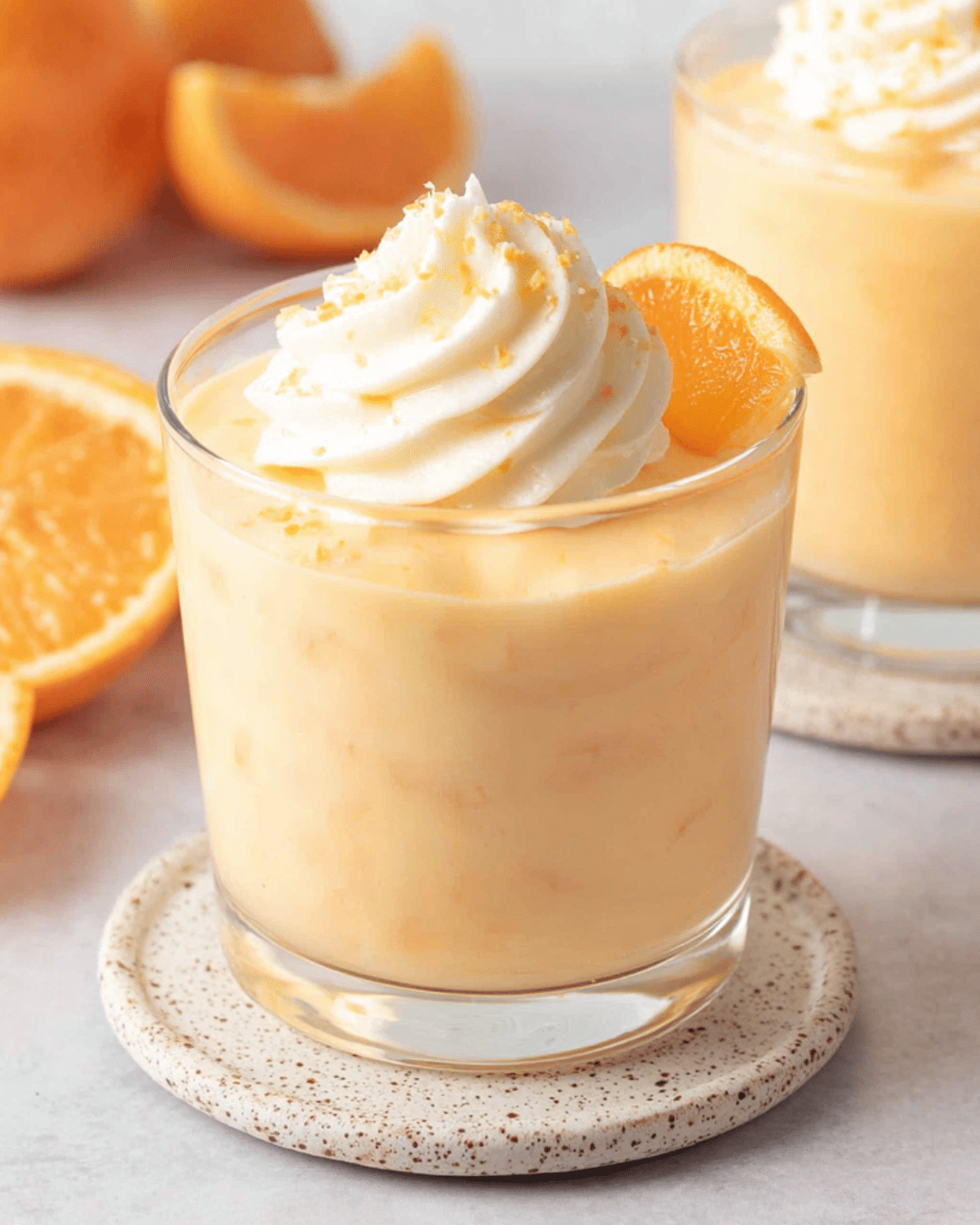
Looking for a no-fuss, no-bake dessert that tastes as refreshing as it looks? These Orange Mousse Cups are a simple yet stunning treat packed with bright citrus flavor, creamy texture, and an airy finish. Made with just four main ingredients, this mousse is the perfect make-ahead dessert for dinner parties, holidays, or even a casual summer night. In this article, we’ll guide you through the full recipe, step-by-step tips, serving ideas, and clever customizations that ensure your mousse turns out picture-perfect every time. If you’re ready to impress your guests with a silky, zesty dessert that requires minimal effort, you’re in the right place.
Don’t miss our Cranberry Orange Preserves recipe to pair with this mousse for a festive flavor duo.
JUMP TO
Table of Contents
The Appeal of Orange Mousse Cups
Why Orange Mousse Is a Crowd Favorite
Orange mousse combines the best of both dessert worlds—it’s rich and creamy, yet light and refreshing. The citrusy tang of freshly squeezed orange juice cuts through the sweetness, offering balance and depth. This mousse is naturally elegant in appearance, served in clear glass cups or ramekins that highlight its velvety smooth texture. Since it’s a no-bake option, it’s ideal for warm seasons or busy holiday cooking when oven space is tight.
Plus, with its quick prep time and chill-to-set simplicity, this dessert is a dream for hosts who want to get ahead. Just make it the night before, let it set, and wow your guests with minimal stress.
When to Serve Orange Mousse Cups (Occasions & Events)
Orange Mousse Cups shine at nearly any gathering. Here are some of the most popular times to serve them:
- Dinner Parties – Add elegance without the extra work.
- Holiday Meals – Their festive citrus flavor fits right into Thanksgiving, Christmas, and Easter spreads.
- Mother’s Day or Bridal Showers – Light, airy, and perfectly portioned for pretty presentation.
- Summer BBQs & Picnics – Keep them chilled for a refreshing end to a warm meal.
- Weeknight Treats – With only four ingredients, they’re easy enough to whip up just because.
Discover great ideas like this Apple Cranberry Pie for your next gathering.
The Nutritional Edge of a Citrus-Based Dessert
Compared to many rich, butter-laden desserts, mousse made from orange juice and whipped egg whites is relatively low in fat. Using pasteurized eggs also keeps things safe without the need for high-heat cooking. Here’s a quick look at the average nutrition for one serving of orange mousse:
| Nutrient | Amount per Serving |
|---|---|
| Calories | 278 kcal |
| Protein | 7 g |
| Carbohydrates | 31 g |
| Sugars | 30 g |
| Fat | 15 g |
| Vitamin C | 26 mg |
It’s sweet, satisfying, and a better-for-you choice—especially when you skip the whipped topping or use lighter cream alternatives.
Looking for inspiration? Try our Pumpkin Spice Cheesecake Bars for another dessert that’s rich in flavor and surprisingly easy to make.
Key Ingredients and Tools for Making Orange Mousse Cups
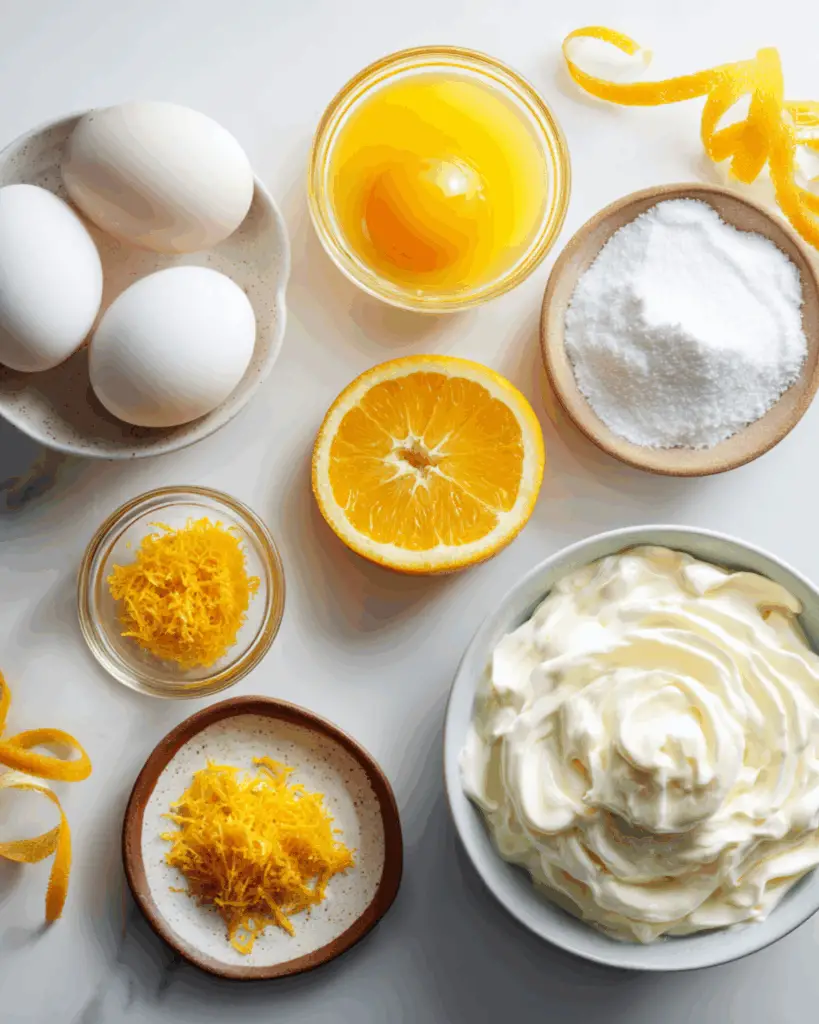
Creating a flawless batch of Orange Mousse Cups is all about balancing simplicity with precision. You only need a handful of ingredients, but each one plays a critical role in texture, flavor, and stability. From the right kind of cream to the perfect whisk, here’s everything you’ll need to make mousse magic happen.
The Core 4 Ingredients That Make the Mousse Work
What makes this recipe truly shine is its minimalism. These are the essential ingredients:
- Fresh Orange Juice & Zest
The soul of the dessert lies in the citrus. Freshly squeezed orange juice offers bright, tangy flavor, while the zest intensifies the orange aroma. Avoid the bitter white pith for the best result. - Eggs (Separated)
You’ll need both yolks and whites. The yolks create a rich custard base when cooked with sugar and juice. Meanwhile, whipped egg whites provide that signature fluffy mousse texture. Always opt for pasteurized eggs for food safety. - Caster Sugar
This fine sugar dissolves quickly and evenly, sweetening both the custard and the whipped whites. Split the sugar into two equal parts—half for each step. - Gelatine Powder
This sets the mousse once chilled, ensuring it holds its shape. Mix it with cold water to activate before adding to the warm custard. You can substitute with gelatine sheets if preferred.
Here’s a quick overview table:
| Ingredient | Purpose |
|---|---|
| Orange Juice/Zest | Flavor & aroma |
| Egg Yolks | Richness & creamy base |
| Egg Whites | Light, airy texture |
| Caster Sugar | Sweetness & structure for whipping |
| Gelatine | Setting agent |
Don’t miss our Homemade Chocolate Orange Sticks for another creative way to enjoy orange in dessert form.
Optional Add-ons: Cream Toppings, Garnishes & Twists
While the base mousse is already a showstopper, a few optional additions can elevate the look and flavor:
- Whipped Orange Cream: Heavy cream whipped with powdered sugar and more zest creates a rich topping.
- Fresh Orange Slices: A simple garnish that enhances both presentation and taste.
- Mint Leaves or Edible Flowers: Add a pop of color for a party-ready finish.
- Orange Curd Swirl: For extra depth, spoon a swirl of tangy orange curd on top.
If you’re feeling festive, check out our Christmas Candy Bark for more topping inspiration.
Essential Tools for Mousse Perfection
You don’t need a high-end kitchen to get mousse right, but using the right equipment makes a difference:
- Small Saucepan: For cooking the egg yolk and juice mixture into a smooth custard.
- Fine Mesh Sieve: To strain the cooked base, removing any lumps.
- Mixing Bowls (x2): One for yolk mixture, one for whipping egg whites.
- Hand or Stand Mixer: For whipping the egg whites to stiff, glossy peaks.
- Rubber Spatula: Gently folds the whites into the base without deflating.
- Glass Cups or Ramekins: Individual servings not only look great but also help with portion control.
Looking to upgrade your dessert presentation? Try using the clear glass jars we use in our Cookie Dough Dip recipe—they double as great mousse containers!
Step-by-Step Guide: How to Make Perfect Orange Mousse Cups
Creating Orange Mousse Cups may look impressive, but the process is surprisingly straightforward when broken into stages. From prepping the citrus custard to folding in perfectly whipped egg whites, here’s how to make this dessert like a pro.
Preparing the Orange-Yolk Custard Base
Start by prepping your ingredients: zest and juice the oranges, separate the eggs, and rehydrate the gelatin powder in cold water (or soak gelatin sheets if using those).
- Combine Egg Yolks and Sugar: In a small saucepan, whisk together the egg yolks and half of the caster sugar until smooth.
- Add Orange Juice: Pour in the freshly squeezed orange juice and whisk well to create a uniform mixture.
- Cook on Low Heat: Gently cook over low heat, stirring constantly with a heatproof spatula. The goal is to thicken the mixture into a custard without curdling the eggs. Use a thermometer if you have one—cook until the mixture reaches 180–183°F (82–84°C).
- Strain the Mixture: Once thickened, pour it through a fine mesh sieve into a clean bowl. This ensures a silky-smooth base, free of any egg bits.
This step forms the creamy heart of your mousse and sets the stage for the next crucial phase.
Don’t miss our Pumpkin Cream Cheese Muffins for another great recipe using a custard-like base.
Activating Gelatine & Infusing Orange Zest
Once strained, immediately whisk in your activated gelatin paste until fully dissolved in the warm mixture. Then:
- Add Orange Zest: Stir in the orange zest for a bright flavor lift.
- Cool Before Folding: Cover the bowl with plastic wrap (touching the surface) and let it chill for 30–60 minutes. It should be cool to the touch but not fully set.
This chilling period allows the base to reach the right consistency so it blends seamlessly with the whipped whites later.
Whipping and Folding Egg Whites the Right Way
- Whip Egg Whites: In a very clean bowl, begin whipping the egg whites at medium speed until they start to foam. Slowly add the remaining sugar, one tablespoon at a time, and whip until stiff peaks form. The meringue should be glossy and hold its shape.
- Temper the Base: Lightly whisk the chilled orange base to loosen it. Gently fold in a quarter of the whipped egg whites using a whisk to lighten the mixture.
- Fold the Rest Carefully: Switch to a rubber spatula and fold in the remaining egg whites in 3–4 additions. Be gentle—over-mixing will deflate the air you just whipped in.
You’re looking for a light, creamy, custard-like texture that will firm up during chilling.
Check out our Strawberry Tiramisu for more folding techniques that result in airy layers.
Assembling and Setting the Mousse Like a Pro
Now that your mousse is fully mixed:
- Pour Into Cups: Divide the mixture into glass serving cups, ramekins, or jars. Smooth the tops with a spoon if needed.
- Chill to Set: Place the cups in the refrigerator for at least 3 to 4 hours, or ideally overnight. This allows the gelatin to set and gives the mousse its signature structure.
- Optional Whipped Cream Topping: Just before serving, whip heavy cream with powdered sugar and a little orange zest until stiff peaks form. Pipe or dollop on top, and garnish with a small slice of fresh orange for a beautiful finish.
Once set, these mousse cups are ready to impress!
Variations & Customizations to Try
Making the same mousse every time can get repetitive—but this recipe is incredibly flexible. Whether you’re looking to go dairy-free, switch up the flavor, or experiment with presentation, there are plenty of ways to mix things up.
Dairy-Free or Vegan Options: What Works & What Doesn’t
While this recipe uses eggs and optional cream, it can be adjusted:
- Gelatine Alternatives: Use agar-agar as a vegan substitute, but be aware it sets differently and needs boiling.
- Whipped Aquafaba: For an egg-free version, aquafaba (chickpea liquid) can mimic whipped egg whites, though it creates a softer structure.
- Coconut Cream Topping: Swap out heavy cream for chilled coconut cream for a dairy-free twist.
Keep in mind that omitting eggs altogether may reduce the mousse’s signature fluffiness, but the flavor can still shine.
Swapping Citrus: Lemon, Blood Orange, and Beyond
Want a flavor twist?
- Blood Orange: Adds color and depth with slightly berry-like notes.
- Lemon or Lime: Sharp, tangy options for more zing.
- Tangerine or Clementine: Sweeter and milder—great for kids!
Always use fresh juice and zest for the best results.
Serving Styles: Cups, Shots, or Layered Desserts
Presentation matters. Here are a few creative ways to serve your mousse:
- Mini Dessert Shots: Great for buffets and tasting tables.
- Layered Parfaits: Alternate mousse with orange curd or sponge cake.
- Chocolate Shell Cups: For an edible twist, use molded chocolate as a base.
Looking for inspiration? Try our Christmas Cookie Bars for more layering ideas.
Common Mistakes and Troubleshooting
Even experienced cooks can run into a few mousse mishaps. Here’s how to avoid or fix the most common issues.
Why Your Mousse Turned Runny or Dense
- Runny Mousse: Usually from under-whipped egg whites or skipping the chill time.
- Dense Mousse: Likely caused by over-folding or letting the gelatin set too long before adding the egg whites.
Avoiding Overwhipped Egg Whites
Whip to stiff peaks, not dry ones. If they look grainy or crumbly, they’ve gone too far and won’t fold in smoothly.
How Long to Chill for Best Results
At least 3 to 4 hours, but overnight is ideal. This gives the mousse time to firm up completely and develop its airy texture.
FAQ About Orange Mousse Cups
Can You Freeze Orange Mousse?
No. Freezing causes the mousse to separate and lose its fluffy texture. It’s best served fresh and stored in the fridge for up to 2 days.
Are Raw Eggs Safe in This Recipe?
Yes, if you use pasteurized eggs. They’re gently heat-treated to destroy bacteria without cooking the egg.
Can You Replace Egg Whites with Whipped Cream?
Technically, yes—but the texture changes. You’ll get a heavier, creamier mousse instead of something light and airy.
Conclusion: Refresh Your Dessert Game with These Citrus Mousse Delights
When you’re craving something light, luxurious, and citrusy, Orange Mousse Cups check every box. They’re fast, elegant, make-ahead friendly, and endlessly customizable. Whether you serve them at a holiday dinner or enjoy them solo on a quiet night in, they’ll always bring a bit of sunshine to your dessert table.
Don’t miss our No Bake Apple Cheesecake for another creamy, fruit-forward treat you can prepare ahead.
PrintOrange Mousse Cups

These Orange Mousse Cups are a light, fluffy, no-bake dessert made with just 4 ingredients. They’re perfect for holidays, dinner parties, or any occasion that calls for an easy, elegant treat.
- Prep Time: 25 minutes
- Cook Time: 10 minutes
- Total Time: 5 hours 25 minutes (including chilling)
- Yield: 4 servings
- Category: Dessert
- Method: No-bake
- Cuisine: French
- Diet: Vegetarian
Ingredients
- 3 large pasteurized eggs (separated)
- 80g caster sugar (divided)
- 180ml fresh orange juice (about 3 large oranges)
- 3/4 tsp gelatine powder + 1 tbsp cold water (or 1.5 gelatine sheets)
- 2 tsp orange zest
- Optional: 120ml heavy cream (min 30% fat)
- Optional: 20g icing sugar
- Optional: 1 tsp orange zest (for whipped cream)
Instructions
- Prepare ingredients: zest and juice the oranges, separate the eggs, and rehydrate gelatine in cold water.
- In a small saucepan, whisk egg yolks with half the caster sugar until smooth. Add orange juice and whisk well.
- Cook over low heat while stirring constantly until the mixture thickens (180–183°F). Do not boil.
- Strain the mixture into a bowl using a fine mesh sieve. Discard any lumps.
- Add gelatine paste and whisk until fully dissolved. Stir in orange zest.
- Cover with plastic wrap and refrigerate for 30–60 minutes until cool but not set.
- Whip egg whites in a clean bowl until foamy, then slowly add remaining sugar. Beat to stiff peaks.
- Lightly whisk the orange base to loosen. Fold in a quarter of the egg whites, then gently fold in the rest with a spatula.
- Pour mousse into cups or ramekins. Chill for at least 3–4 hours or overnight until set.
- Optional: Whip cream with icing sugar and zest until stiff peaks form. Top mousse with whipped cream and garnish as desired.
Notes
- Use pasteurized eggs for safety since egg whites are not cooked.
- Do not over-whip egg whites or they may deflate or turn grainy.
- For a vegan version, try using aquafaba and agar-agar as substitutes.
- Mousse does not freeze well—store in the fridge and consume within 2 days.
- Chill the base just enough so it doesn’t set before folding in egg whites.
Nutrition
- Serving Size: 1 cup
- Calories: 278 kcal
- Sugar: 30 g
- Sodium: 64 mg
- Fat: 15 g
- Saturated Fat: 8 g
- Unsaturated Fat: 5 g
- Trans Fat: 0.01 g
- Carbohydrates: 31 g
- Fiber: 0.3 g
- Protein: 7 g
- Cholesterol: 174 mg