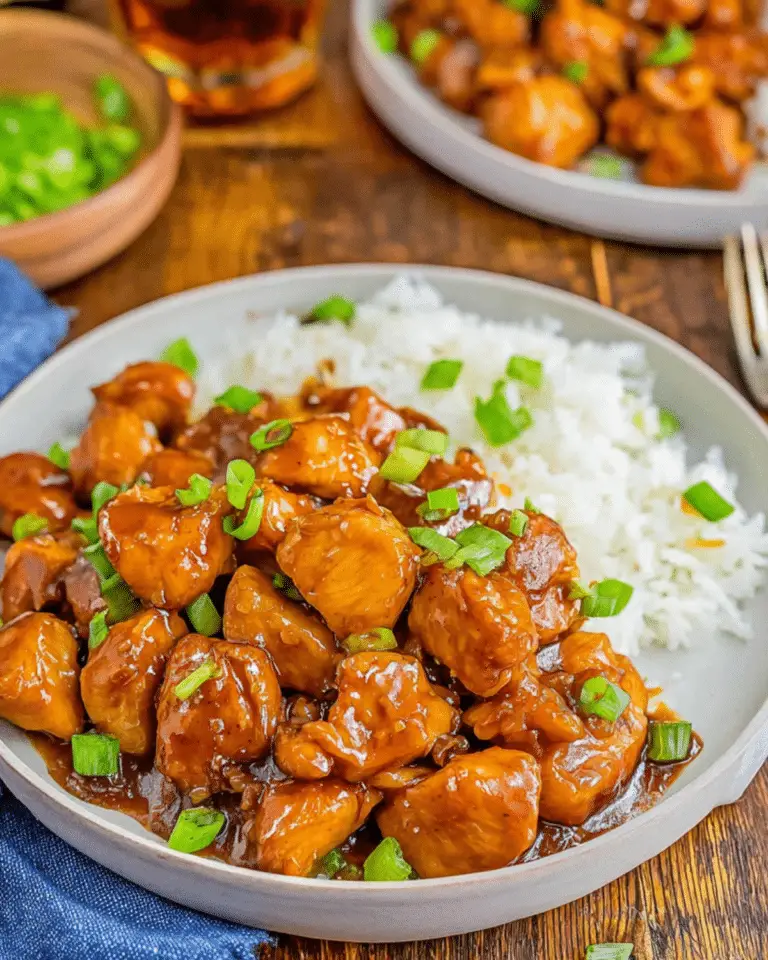
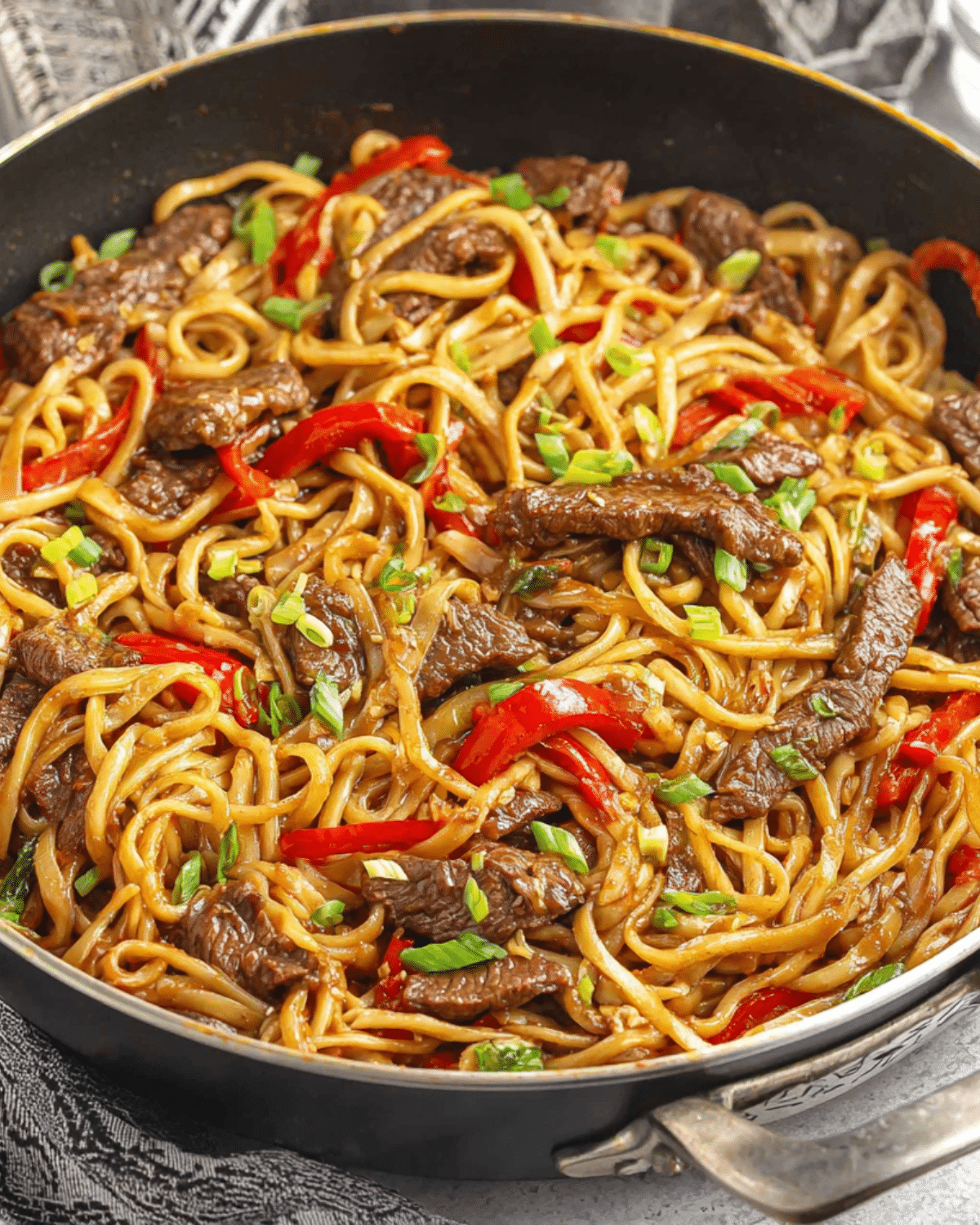
If you’re craving a meal that’s as satisfying as your favorite takeout but twice as fast to make, Mongolian Beef Noodles might just become your new go-to dinner. This recipe blends tender strips of beef with chewy noodles in a glossy, savory-sweet Mongolian sauce that hits every note — salty, garlicky, and slightly sweet. Perfect for busy weeknights, it’s ready in under 30 minutes and requires simple ingredients you probably already have in your kitchen.
Unlike typical stir-fry recipes, Mongolian Beef Noodles offer the perfect balance of rich flavors and quick cooking time. The sauce clings beautifully to the noodles, ensuring every bite is coated in that addictive soy-garlic glaze. Plus, you can easily customize it by tossing in your favorite vegetables or adjusting the sweetness and heat level to your liking.
Whether you’re an experienced cook or just starting out, this Mongolian Beef Noodles recipe is a flavorful and foolproof way to enjoy a restaurant-quality meal at home. Inspired by the traditional Mongolian beef dish, this version takes the same beloved sauce and gives it a comforting noodle twist — perfect for those who love both meat and carbs.
To understand why this dish is so popular and beloved by home cooks, let’s look at what makes Mongolian Beef Noodles truly special.
JUMP TO
Table of Contents
What Makes Mongolian Beef Noodles So Special
The Perfect Fusion of Flavors
At the heart of Mongolian Beef Noodles lies its irresistible flavor combination — a sweet, salty, and savory blend that’s both comforting and exciting. The key to this harmony is the sauce: a simple mix of soy sauce, garlic, brown sugar, and ginger that caramelizes slightly as it cooks. This gives the beef and noodles a deep, rich taste reminiscent of your favorite Asian restaurant dishes.
The umami from soy sauce pairs beautifully with the sweetness of brown sugar, while the fresh zing of ginger and the aromatic garlic create layers of depth. When everything comes together in the pan, the sauce thickens into a glossy coating that perfectly clings to each noodle strand. The result? A dish that feels indulgent but takes mere minutes to prepare.
For an authentic twist, you can reference the Mongolian Beef recipe on AllRecipes, which shares similar cooking principles — yet the addition of noodles in this version makes it a complete one-pan meal.
Why It’s Better Than Takeout
Many people love Mongolian Beef Noodles because it delivers that comforting takeout flavor without the price tag or grease. Cooking it at home gives you full control over every ingredient — from sodium levels to the type of oil used. You can swap traditional flank steak for sirloin, or even use chicken or tofu if you prefer.
Additionally, making this dish yourself ensures it’s fresh, hot, and full of bold flavors. You don’t have to wait for delivery or settle for soggy noodles — everything comes straight off the stovetop perfectly tender and saucy.
Not only does this recipe save time, but it also brings flexibility. You can add vegetables like broccoli, snow peas, or bell peppers to make it more balanced and colorful. That’s what makes homemade Mongolian Beef Noodles such a crowd-pleaser — it’s endlessly adaptable, full of flavor, and ready in minutes.
If you’re a fan of takeout-style meals but prefer a healthier approach, check out Beef Lo Mein — another quick noodle recipe that captures the same rich Asian taste in a wholesome, homemade version.
Ingredients You’ll Need for Mongolian Beef Noodles
Creating Mongolian Beef Noodles at home is simpler than it looks. The ingredients are easy to find, affordable, and come together to make a dish that’s bold in flavor yet balanced in taste. Here’s everything you’ll need to whip up this restaurant-quality meal in under 30 minutes.
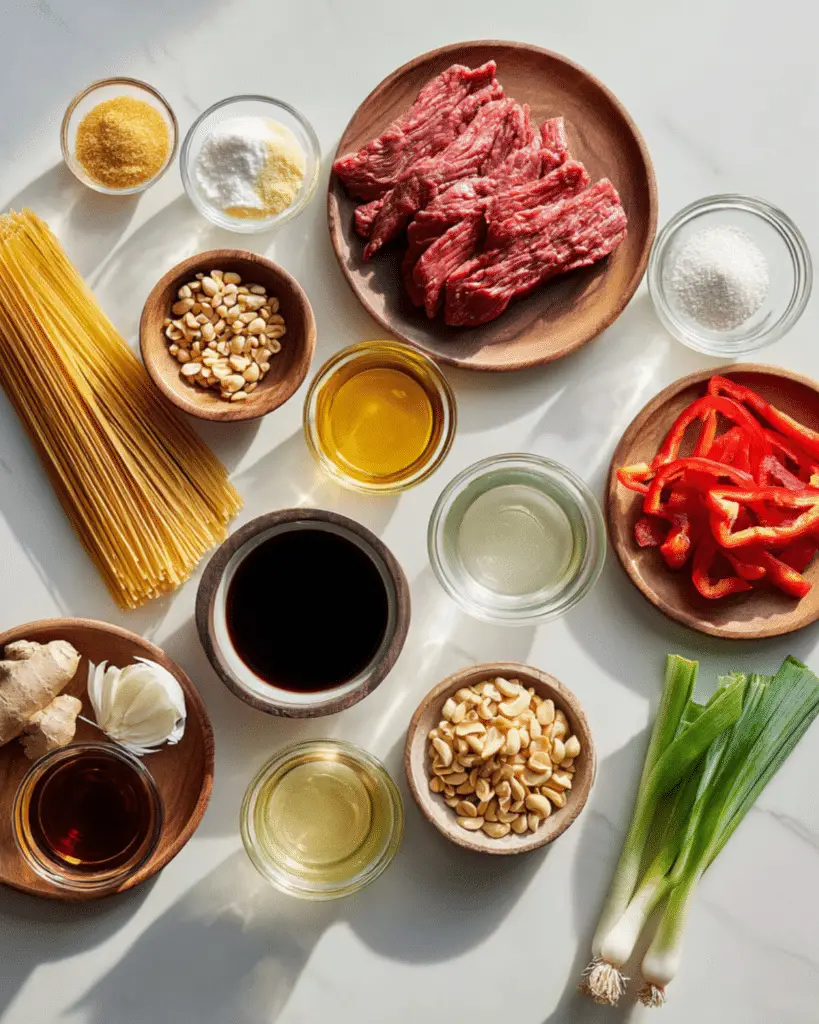
Essential Ingredients
| Ingredient | Quantity | Notes |
|---|---|---|
| Flank steak or sirloin | 1 lb | Slice thinly across the grain |
| Soy sauce | 1/2 cup | Use low-sodium for better control |
| Brown sugar | 1/4 cup | Adds the signature Mongolian sweetness |
| Garlic | 3 cloves, minced | Fresh garlic gives the best flavor |
| Fresh ginger | 1 tablespoon, grated | Adds warmth and depth |
| Cornstarch | 1 tablespoon | Helps thicken the sauce |
| Vegetable oil | 2 tablespoons | For searing the beef |
| Lo mein noodles or spaghetti | 8 oz | Cooked and drained |
| Green onions | 3–4 stalks | Sliced for garnish |
| Red pepper flakes | Optional | For a bit of heat |
Every ingredient plays a specific role in this dish. The soy sauce forms the savory base, while the brown sugar balances it with sweetness. Garlic and ginger infuse aroma and freshness, and cornstarch thickens the sauce so it coats the noodles beautifully.
If you enjoy exploring Asian-inspired dinners, try Spicy Ramen Noodles next — another quick, flavor-packed meal that’s perfect for busy nights.
Ingredient Substitutions & Variations
One of the best things about Mongolian Beef Noodles is its flexibility. You can easily adapt the ingredients to fit your taste preferences or dietary needs:
- Gluten-free option: Replace soy sauce with tamari or coconut aminos.
- Spicier version: Add a dash of sriracha or chili garlic paste to the sauce.
- Vegetarian option: Use firm tofu instead of beef and adjust the cook time.
- More veggies: Toss in broccoli, bell peppers, or snap peas for extra crunch and color.
For more ideas like this, check out Asian Sauce Guide — it explains how to build the perfect stir-fry sauce for any dish.
Step-by-Step Guide to Making Mongolian Beef Noodles
Cooking Mongolian Beef Noodles is a straightforward process. The secret lies in proper preparation — slicing the beef thinly, making a well-balanced sauce, and combining everything at the right time for that glossy, flavorful finish.
Preparing the Beef
Start by slicing the beef thinly against the grain — this keeps it tender and easy to chew. If you freeze the beef for about 20 minutes beforehand, it becomes firmer and easier to cut. Toss the slices with a tablespoon of cornstarch and let them rest for 10 minutes. This step helps lock in moisture and creates that crispy sear when cooking.
You can also marinate the beef briefly in soy sauce and a touch of brown sugar for added depth. The goal is to infuse flavor without making it too salty.
Cooking the Noodles
While the beef rests, cook the noodles according to the package instructions. Drain them just before they reach al dente — they’ll finish cooking in the sauce later. Overcooked noodles can become soggy once added to the pan, so it’s best to keep them slightly firm.
Making the Signature Sauce
This sauce is what gives Mongolian Beef Noodles its irresistible flavor. In a small bowl, whisk together soy sauce, brown sugar, minced garlic, grated ginger, and a bit of cornstarch mixed with water (to form a slurry).
When heated, this mixture thickens into a shiny, caramel-colored glaze. It clings perfectly to the beef and noodles, creating that iconic restaurant-style texture. Adjust the sweetness or saltiness to your preference — the beauty of cooking at home is you’re in full control of flavor balance.
Combining Everything
Now it’s time to bring the dish together. In a large skillet or wok, heat oil over medium-high heat. Sear the beef in small batches to avoid overcrowding — this helps achieve a perfect sear. Once browned, remove the beef and set it aside.
Add the sauce mixture to the same pan and simmer until it begins to thicken. Toss the cooked noodles and beef back into the skillet, stirring well so the sauce coats every strand. Finally, top with chopped green onions and a sprinkle of red pepper flakes for a touch of color and spice.
For more quick dinner inspiration, try Quick Chicken Stir-Fry — another delicious meal ready in less than 30 minutes.
Why This Recipe Works
What makes Mongolian Beef Noodles truly stand out is its simplicity. You only need one pan, a handful of pantry staples, and about half an hour. The flavors are bold yet balanced, making it ideal for both beginners and seasoned cooks. Plus, leftovers taste even better the next day, as the sauce soaks deeper into the noodles.
Tips for the Perfect Mongolian Beef Noodles
Cooking Mongolian Beef Noodles may be simple, but a few small techniques can take it from good to exceptional. Whether it’s the beef cut you choose or how you balance the sauce, these tips ensure that your noodles turn out flavorful, glossy, and restaurant-quality every time.
Choose the Right Cut of Beef
The cut of beef you use makes a huge difference. Flank steak and sirloin are ideal because they’re tender and absorb the sauce well. Always slice thinly against the grain to prevent toughness. If you want an ultra-tender texture, you can briefly marinate the beef in a bit of soy sauce and cornstarch — a trick often used in Asian cooking for silky meat.
Balancing the Sauce
The magic of Mongolian Beef Noodles lies in its sauce — a perfect balance of salty soy, sweet brown sugar, and aromatic garlic. To get it right, taste as you go. If it’s too salty, add a teaspoon of honey or a splash of water. Too sweet? Add a little more soy sauce.
For those who love experimenting with flavors, our Asian Sauce Guide offers plenty of variations you can use in noodle dishes, stir-fries, or marinades.
Keep Everything Hot and Quick
Stir-frying is all about high heat and speed. Make sure all your ingredients — sliced beef, sauce, and noodles — are ready before you start cooking. This prevents overcooked noodles and helps the sauce thicken evenly.
If you’d like another speedy dinner idea, try Meal Prep Ideas for quick, make-ahead recipes that taste fresh all week.
Serving Suggestions and Storage Tips
How to Serve Mongolian Beef Noodles
Serve Mongolian Beef Noodles straight from the pan while they’re still steaming hot. The glossy noodles and saucy beef make a complete meal on their own, but you can also pair them with:
- Steamed jasmine rice for extra volume
- Stir-fried vegetables for color and crunch
- Fresh herbs like cilantro or green onions for a burst of flavor
If you enjoy exploring takeout-style recipes, you’ll also love Easy Weeknight Meals — full of simple Asian-inspired dinner ideas you can make in minutes.
How to Store and Reheat
Store leftovers in an airtight container for up to 3–4 days in the fridge. When reheating, use a skillet over medium heat with a splash of water or broth to keep the noodles from drying out. Avoid microwaving for too long, as it can make the beef chewy.
For long-term storage, you can freeze the cooked noodles and sauce separately for up to two months. When ready to eat, thaw overnight in the fridge and reheat gently on the stovetop.
Frequently Asked Questions (FAQs)
Can I use ground beef instead of sliced steak?
Yes! Ground beef works perfectly for a quicker version of Mongolian Beef Noodles. Just cook it first, drain any excess fat, and then add the sauce and noodles.
Can I use rice noodles or spaghetti?
Absolutely. Spaghetti gives a chewy texture similar to lo mein noodles, while rice noodles make it gluten-free.
Is this dish spicy?
Traditionally, Mongolian Beef Noodles are mild. However, you can easily add spice with red chili flakes, sriracha, or a touch of chili paste.
Can I make it ahead of time?
Yes. You can prepare the sauce and slice the beef in advance, then cook everything fresh when ready to serve. The noodles stay best when freshly tossed in the sauce.
What vegetables pair well with Mongolian Beef Noodles?
Broccoli, bell peppers, carrots, snap peas, and mushrooms are all great additions. They add color, texture, and extra nutrition.
Conclusion
Mongolian Beef Noodles is the ultimate quick comfort meal — rich, savory, and satisfying, yet effortless enough for a weeknight. With tender slices of beef, perfectly sauced noodles, and a sweet-salty glaze that clings to every strand, it’s a dish that delivers maximum flavor with minimal effort.
Whether you’re craving a takeout fix or looking for a meal to impress your family, this recipe is a guaranteed hit. Plus, it’s flexible — you can add vegetables, adjust flavors, or swap proteins based on what you have at home.
PrintMongolian Beef Noodles

Mongolian Beef Noodles is a quick and flavorful 30-minute Asian-inspired dinner featuring tender slices of beef, chewy noodles, and a rich soy-garlic sauce with hints of sweetness and spice. It’s the perfect homemade alternative to takeout, offering a satisfying meal that’s easy, customizable, and ready in minutes.
- Prep Time: 10 minutes
- Cook Time: 20 minutes
- Total Time: 30 minutes
- Yield: 4 servings
- Category: Main Course
- Method: Stir-Fry
- Cuisine: Asian
- Diet: Halal
Ingredients
- 1 lb flank steak or sirloin, thinly sliced against the grain
- 1/2 cup low-sodium soy sauce
- 1/4 cup brown sugar
- 3 cloves garlic, minced
- 1 tablespoon fresh ginger, grated
- 1 tablespoon cornstarch
- 2 tablespoons vegetable oil
- 8 oz lo mein noodles or spaghetti, cooked and drained
- 3–4 stalks green onions, sliced
- 1 teaspoon red pepper flakes (optional)
Instructions
- Slice the beef thinly against the grain. Toss with 1 tablespoon cornstarch and let rest for 10 minutes.
- Cook the noodles according to package directions until just al dente, then drain and set aside.
- In a small bowl, whisk together soy sauce, brown sugar, garlic, ginger, and 1 tablespoon water mixed with a little cornstarch to make a slurry.
- Heat oil in a large skillet or wok over medium-high heat. Sear the beef in batches until browned, then remove and set aside.
- Pour the sauce mixture into the same pan and simmer for 1–2 minutes until thickened.
- Add the cooked noodles and beef to the skillet, tossing to coat evenly in the sauce.
- Top with sliced green onions and red pepper flakes, then serve hot.
Notes
- Slice beef thinly for tenderness and quick cooking.
- Use tamari or coconut aminos for a gluten-free version.
- Add vegetables like broccoli, bell peppers, or snap peas for extra crunch and nutrition.
- Leftovers can be stored in the refrigerator for 3–4 days.
- Reheat gently on the stovetop with a splash of water to maintain texture.
Nutrition
- Serving Size: 1 bowl (approx. 1 1/2 cups)
- Calories: 510
- Sugar: 10g
- Sodium: 980mg
- Fat: 20g
- Saturated Fat: 5g
- Unsaturated Fat: 13g
- Trans Fat: 0g
- Carbohydrates: 50g
- Fiber: 2g
- Protein: 32g
- Cholesterol: 65mg