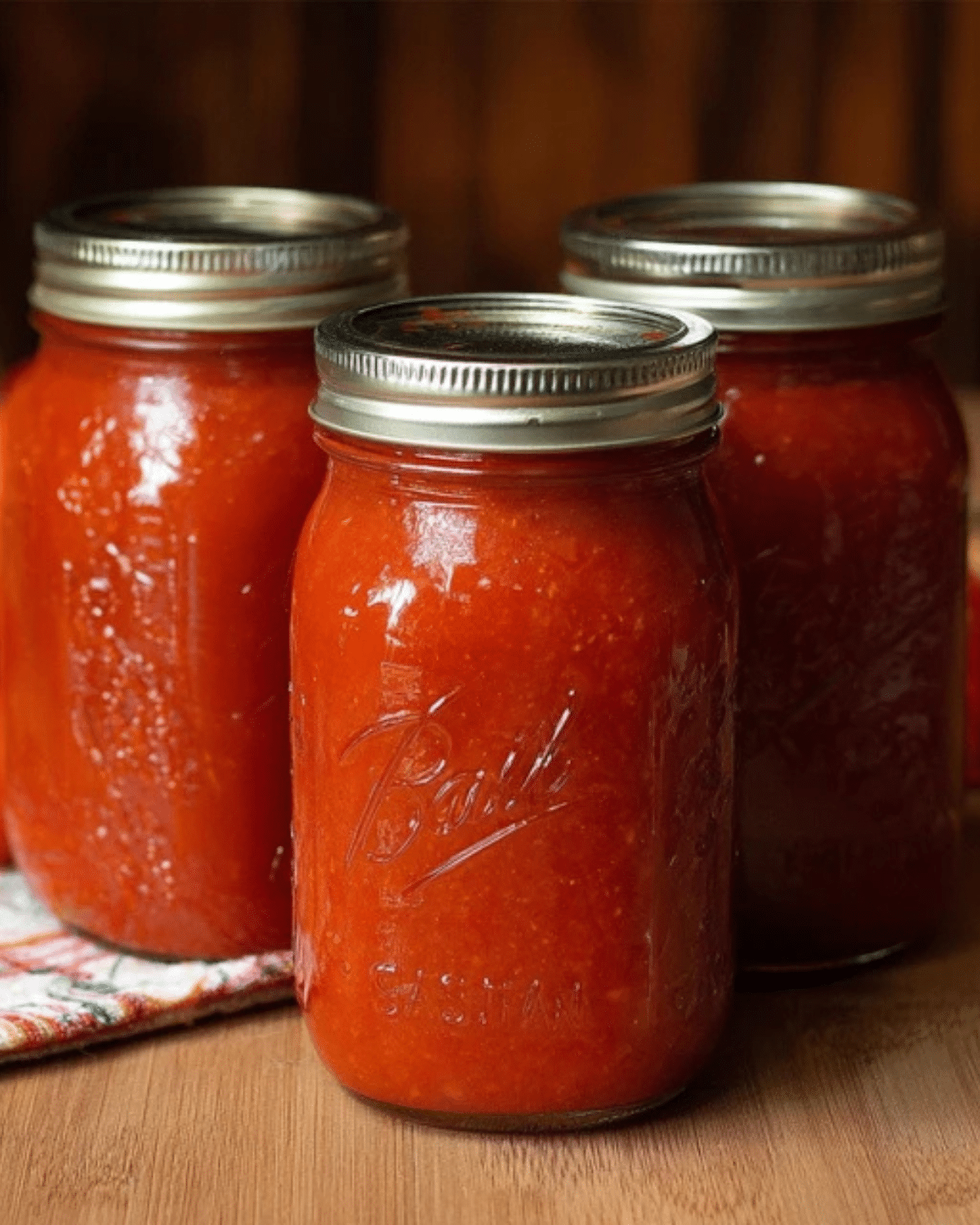
Homemade Canned Sauce is one of the most satisfying ways to preserve fresh tomatoes and enjoy rich, homemade flavor all year long. Whether you grow your own tomatoes or find a great deal at the farmers market, turning them into homemade canned sauce ensures nothing goes to waste. Even better, you control the ingredients, salt level, and seasonings, which means every jar tastes exactly the way you like it.
In this complete guide, you’ll learn how to make homemade canned sauce safely using the water bath method, how to prepare tomatoes properly, how to sterilize jars, and how to ensure long shelf life. By the end, you’ll feel confident stocking your pantry with jars of homemade canned sauce ready for pasta nights, pizzas, soups, and more.
JUMP TO
Table of Contents
Why Homemade Canned Sauce Is Worth Making
Homemade canned sauce offers flavor and flexibility that store-bought jars simply can’t match. While commercial sauces are convenient, they often contain added sugars, preservatives, or excess sodium.
Benefits of Homemade Canned Sauce
There are many reasons to make your own homemade canned sauce:
- No preservatives or artificial ingredients
- Adjustable salt and seasoning
- Cost-effective during peak tomato season
- Pantry-ready convenience
- Long shelf life when properly processed
Because tomatoes are naturally acidic, they are well-suited for water bath canning when proper acid levels are maintained.
Why Water Bath Canning Works for Tomato Sauce
Tomatoes are considered high-acid foods, especially when bottled lemon juice or citric acid is added. This acidity prevents harmful bacteria from growing when processed correctly.
Water bath canning:
- Is safe for acidic foods
- Creates shelf-stable jars
- Requires minimal specialized equipment
However, always follow proper guidelines to ensure your homemade canned sauce remains safe for storage.
Choosing the Best Tomatoes for Homemade Canned Sauce
Not all tomatoes are created equal when it comes to sauce.
Best choices include:
- Roma tomatoes
- Paste tomatoes
- Plum varieties
These tomatoes contain less water and more flesh, which means thicker sauce and shorter cooking time.
Avoid overripe, bruised, or damaged tomatoes, as they can affect both flavor and safety.
How to Make Homemade Canned Sauce Step by Step
Now let’s walk through the full process of making homemade canned sauce from start to finish.
Ingredients for Homemade Canned Sauce
You will need:

- 20 pounds fresh Roma or paste tomatoes
- 2 medium onions, finely chopped
- 6 cloves garlic, minced
- 2 tablespoons olive oil
- 2 teaspoons salt (adjust to taste)
- 1 tablespoon dried oregano
- 1 tablespoon dried basil
- Bottled lemon juice (2 tablespoons per quart jar)
Because acidity is critical for safe canning, always use bottled lemon juice rather than fresh. Bottled juice has consistent acidity.
Preparing the Tomatoes
Proper preparation ensures smooth texture and safe preservation.
Step 1: Wash and Score
Wash tomatoes thoroughly. Score an “X” on the bottom of each tomato with a knife.
Step 2: Blanch and Peel
Bring a large pot of water to a boil. Submerge tomatoes for 30–60 seconds until skins loosen.
Transfer immediately to ice water. The skins should slip off easily.
Step 3: Core and Crush
Remove cores and any damaged spots. Then crush tomatoes by hand or pulse in a food processor.
Because paste tomatoes contain less liquid, your homemade canned sauce will thicken more quickly.
Cooking the Homemade Canned Sauce
Cooking concentrates flavor and improves texture.
Sauté Aromatics
In a large stockpot, heat olive oil over medium heat. Add onions and cook until softened. Then add garlic and cook for one minute.
Add Tomatoes and Seasonings
Pour crushed tomatoes into the pot. Stir in salt, oregano, and basil.
Bring mixture to a gentle boil, then reduce to a steady simmer.
Simmer and Thicken
Simmer uncovered for 1–2 hours, stirring occasionally. The sauce should reduce and thicken.
Because thickness affects processing quality, aim for a consistency slightly thinner than final serving texture. It will thicken more as it cools.
Preparing Jars for Canning
Cleanliness is crucial when making homemade canned sauce.
Sterilize Jars
Wash jars in hot, soapy water and rinse well. Keep jars hot until ready to fill by placing them in simmering water.
Prepare Lids
Heat lids in warm (not boiling) water to soften sealing compound.
Filling and Processing Homemade Canned Sauce
Now comes the important canning step.
Add Lemon Juice
Add 2 tablespoons bottled lemon juice to each quart jar (or 1 tablespoon per pint).
This ensures proper acidity for safe homemade canned sauce.
Fill Jars
Using a funnel, ladle hot sauce into jars, leaving ½ inch headspace.
Remove air bubbles with a non-metallic utensil.
Wipe rims clean and secure lids and rings until fingertip tight.
Water Bath Processing
Place filled jars into a boiling water bath canner. Ensure jars are fully submerged with at least 1 inch of water above lids.
Process:
- 40 minutes for pints
- 45 minutes for quarts
(Adjust processing time for altitude if necessary.)
After processing, carefully remove jars and allow them to cool undisturbed for 12–24 hours.
You should hear a satisfying “pop” as jars seal.
Checking Jar Seals
Once cooled:
- Press the center of each lid
- If it does not flex, it is sealed properly
Any unsealed jars should be refrigerated and used within one week.
Flavor Variations for Homemade Canned Sauce
Once you’ve mastered the basic homemade canned sauce recipe, you can easily customize it to match your family’s preferences. Because the foundation is simple tomato and herbs, small additions can completely transform the flavor profile.
Spicy Marinara Version
If you enjoy heat, add:
- 1–2 teaspoons red pepper flakes
- A pinch of black pepper
- Finely minced fresh chili peppers
Stir the spice into the sauce while it simmers. However, keep in mind that stronger flavors intensify slightly after canning.
Roasted Garlic Tomato Sauce
For deeper flavor:
- Roast a full head of garlic
- Squeeze softened cloves into the simmering sauce
Roasted garlic gives homemade canned sauce a slightly sweet, rich undertone that pairs beautifully with pasta and meat dishes.
Herb-Heavy Italian Blend
Increase the dried basil and oregano, or add:
- Thyme
- Parsley
- Bay leaf (remove before canning)
Because dried herbs concentrate during storage, avoid over-seasoning at first.
No-Onion Version
If you prefer a smoother sauce or avoid onions, simply omit them. The homemade canned sauce will still taste rich thanks to garlic and tomatoes.
Storage and Shelf Life of Homemade Sauce
Proper storage ensures your homemade canned sauce remains safe and flavorful for months.
Pantry Storage
Store sealed jars in a:
- Cool
- Dark
- Dry location
Avoid direct sunlight and temperature fluctuations.
Properly processed homemade canned sauce can last up to 12–18 months. However, for best flavor, try to use it within one year.
Signs of Spoilage
Before using any jar, check for:
- Bulging lids
- Leaking seals
- Mold
- Unpleasant odor
- Cloudy liquid
If anything looks suspicious, discard the jar without tasting.
Nutritional Overview of Homemade Canned Sauce
Homemade canned sauce is naturally low in fat and packed with nutrients from tomatoes.
Estimated nutrition per ½ cup serving:
| Nutrient | Approximate Amount |
|---|---|
| Calories | 70–90 |
| Fat | 2g |
| Carbohydrates | 15g |
| Sugar | 9g (natural from tomatoes) |
| Fiber | 3g |
| Sodium | 200mg (varies by salt added) |
Because you control the salt, homemade canned sauce can be significantly lower in sodium compared to store-bought options.
Tomatoes are also rich in:
- Vitamin C
- Potassium
- Lycopene (a powerful antioxidant)
Frequently Asked Questions About Homemade Canned Sauce
Is it safe to can tomato sauce without lemon juice?
Adding bottled lemon juice or citric acid ensures consistent acidity for safe water bath canning. Skipping it may reduce safety, even if tomatoes taste acidic.
How long does homemade canned sauce last?
Properly processed and sealed jars can last up to 18 months. For best quality, use within one year.
Why did my jars not seal?
Common reasons include:
Dirty jar rims
Improper headspace
Insufficient processing time
Faulty lids
Unsealed jars should be refrigerated and used promptly
Can I pressure can homemade canned sauce?
Yes. Pressure canning is another safe method and may allow shorter processing times. However, follow tested guidelines carefully.
Conclusion: Fresh Flavor All Year Long
Homemade canned sauce is one of the most rewarding pantry staples you can make. By preserving fresh tomatoes at peak season, you capture bright, rich flavor that lasts for months. With proper water bath canning techniques, your homemade canned sauce will remain safe, delicious, and ready whenever you need it.
Whether you use it for pasta night, soups, or casseroles, each jar delivers homemade quality you simply can’t buy in stores. Once you experience the difference, homemade canned sauce may become a yearly tradition in your kitchen.
PrintHomemade Canned Sauce: Fresh & Flavorful Pantry Staple

Homemade Canned Sauce is a rich, flavorful tomato marinara made from fresh tomatoes and preserved using safe water bath canning. This pantry-ready sauce is perfect for pasta, pizza, and everyday cooking.
- Prep Time: 45 minutes
- Cook Time: 2 hours
- Total Time: 2 hours 45 minutes
- Yield: 7 quart jars
Ingredients
- 20 pounds fresh Roma or paste tomatoes
- 2 medium onions, finely chopped
- 6 cloves garlic, minced
- 2 tablespoons olive oil
- 2 teaspoons salt (adjust to taste)
- 1 tablespoon dried oregano
- 1 tablespoon dried basil
- Bottled lemon juice (2 tablespoons per quart jar or 1 tablespoon per pint jar)
Instructions
- Wash tomatoes thoroughly and score an X on the bottom of each.
- Blanch tomatoes in boiling water for 30–60 seconds, then transfer to ice water. Peel skins.
- Remove cores and crush tomatoes by hand or pulse in a food processor.
- In a large stockpot, heat olive oil over medium heat. Saute onions until soft, then add garlic and cook for 1 minute.
- Add crushed tomatoes, salt, oregano, and basil. Bring to a boil, then reduce to a simmer.
- Simmer uncovered for 1–2 hours, stirring occasionally, until slightly thickened.
- Sterilize jars and keep hot until ready to use. Heat lids in warm water.
- Add bottled lemon juice to each jar (2 tablespoons per quart or 1 tablespoon per pint).
- Ladle hot sauce into jars, leaving 1/2 inch headspace. Remove air bubbles and wipe rims clean.
- Secure lids fingertip tight and place jars into a boiling water bath canner.
- Process for 40 minutes for pints or 45 minutes for quarts, adjusting for altitude if necessary.
- Remove jars and allow to cool undisturbed for 12–24 hours. Check seals before storing.
Notes
- Always use bottled lemon juice to ensure consistent acidity for safe canning.
- Do not over-thicken the sauce before canning; it should remain pourable.
- Store sealed jars in a cool, dark place for up to 12–18 months.
- Refrigerate any unsealed jars and use within one week.
- Discard jars with bulging lids, leaks, or off odors.
Nutrition
- Serving Size: 1/2 cup
- Calories: 85 kcal
- Sugar: 9 g
- Sodium: 210 mg
- Fat: 2 g
- Saturated Fat: 0.3 g
- Unsaturated Fat: 1.5 g
- Trans Fat: 0 g
- Carbohydrates: 16 g
- Fiber: 3 g
- Protein: 3 g
- Cholesterol: 0 mg