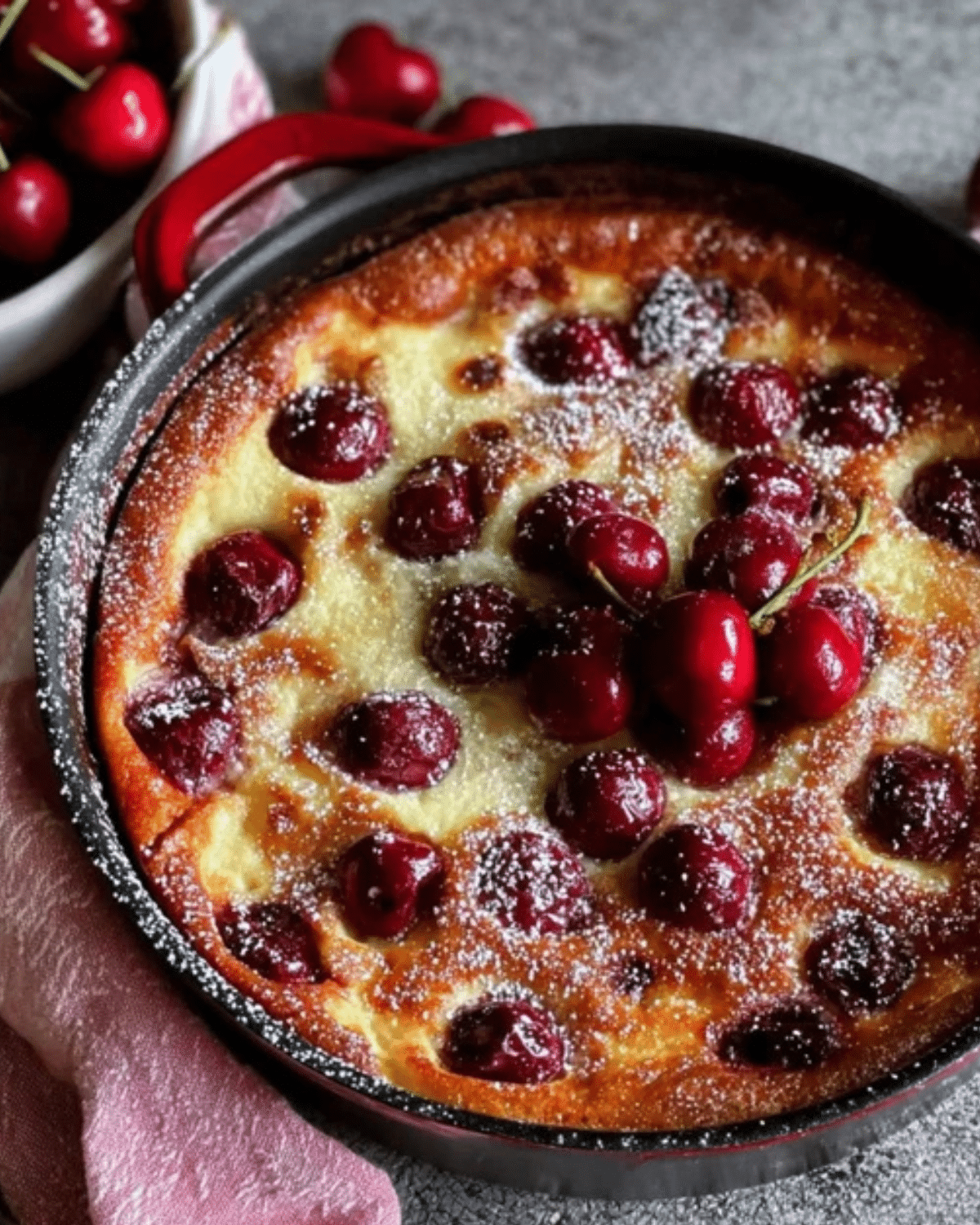
Easy cherry clafoutis is a classic French dessert that looks elegant yet requires very little effort. Made with juicy cherries baked in a light, custard-like batter, this easy cherry clafoutis recipe is perfect for anyone who wants a homemade dessert without complicated steps. It comes together quickly, uses simple pantry ingredients, and delivers a soft, lightly sweet texture that feels both comforting and refined.
Unlike many baked desserts, cherry clafoutis does not rely on heavy crusts or elaborate techniques. Instead, it sits somewhere between a pancake and a custard, allowing the cherries to shine while the batter gently sets around them. This article explains what makes cherry clafoutis so popular, how it differs from other fruit desserts, and why it continues to be a favorite in home kitchens.
JUMP TO
Table of Contents
What Is Cherry Clafoutis and Why It’s So Popular
Cherry clafoutis is a traditional French dessert that features fruit baked in a thin batter similar to crêpe or custard batter. While it may look impressive once baked, the process is surprisingly simple, which is why easy cherry clafoutis remains popular with both beginner and experienced bakers.
The Origin of Classic French Cherry Clafoutis
Cherry clafoutis originated in the Limousin region of France, where it was traditionally made with whole, unpitted cherries. The pits were believed to enhance flavor during baking. Over time, many modern recipes began pitting the cherries for convenience, especially for home baking.
Because clafoutis was originally made as a rustic dessert, it was never meant to be overly sweet or decorative. Instead, it focused on showcasing fresh fruit with minimal ingredients. That philosophy remains central to easy cherry clafoutis recipes today.
Why Clafoutis Is One of the Easiest French Desserts
Despite its French origins, clafoutis does not require advanced baking skills. The batter is mixed quickly, often in a single bowl or blender, and poured directly over the fruit. There is no rolling, kneading, or chilling involved.
Because of this simplicity, easy cherry clafoutis is often recommended as a first French dessert for home cooks. It bakes in one dish, requires little monitoring, and delivers consistent results when basic ratios are followed.
Cherry Clafoutis vs Other Baked Fruit Desserts
Unlike pies, tarts, or cobblers, cherry clafoutis has no crust. This allows the dessert to feel lighter and less heavy, even though it is baked. The batter sets softly, creating a custard-like interior that contrasts beautifully with the baked cherries.
Compared to cakes or muffins, clafoutis contains less flour and more eggs and milk, which gives it a delicate texture rather than a crumbly one. This unique structure is what makes easy cherry clafoutis stand out among baked fruit desserts.
Ingredients Needed for an Easy Cherry Clafoutis
One of the reasons easy cherry clafoutis is so approachable is its short ingredient list. This dessert relies on basic pantry staples that come together to form a smooth batter and a soft, custard-like texture. Because there are so few components, choosing good-quality ingredients makes a noticeable difference in the final result.
Essential Ingredients for Cherry Clafoutis
Fresh cherries are the star of easy cherry clafoutis. They provide natural sweetness, a slight tartness, and juicy texture once baked. Traditional recipes often use sweet cherries, although a mix of sweet and slightly tart cherries can add depth of flavor.
Eggs are essential for structure. They help the batter set as it bakes, creating the signature custard consistency. Milk adds moisture and softness, while flour gives the batter just enough body to hold everything together. Sugar provides sweetness without overpowering the cherries.
Butter is used to grease the baking dish and adds subtle richness to the edges of the clafoutis. A small amount of vanilla extract enhances flavor, while a pinch of salt balances sweetness and highlights the fruit.
Choosing the Best Cherries for Clafoutis
Sweet cherries such as Bing or Rainier are ideal for easy cherry clafoutis because they soften nicely and release juice as they bake. Cherries should be firm, plump, and deeply colored, which indicates ripeness.
While traditional French clafoutis often uses unpitted cherries, most modern recipes pit them for convenience and ease of eating. Pitted cherries are especially recommended when serving clafoutis to children or guests unfamiliar with the traditional version.
If fresh cherries are not available, frozen cherries can be used. They should be thawed completely and drained well to prevent excess moisture from affecting the batter.
Ingredient Substitutions That Still Work
Easy cherry clafoutis is flexible and forgiving. Whole milk produces the best texture, but lower-fat milk can be used if needed. The clafoutis may be slightly less rich, but it will still set properly.

All-purpose flour works best, although gluten-free flour blends designed for baking can be substituted in equal amounts. Granulated sugar is traditional, but a portion can be replaced with another sweetener as long as the batter remains smooth.
By keeping substitutions minimal and balanced, easy cherry clafoutis maintains its classic texture while adapting to different preferences.
How to Make Easy Cherry Clafoutis Step by Step
Making easy cherry clafoutis is a straightforward process, but following each step carefully ensures the dessert bakes evenly and develops the soft, custard-like texture it is known for. Because the batter is thin and delicate, attention to small details makes a noticeable difference in the final result.
Preparing the Baking Dish and Cherries
Start by preheating the oven to 350°F. Clafoutis benefits from a fully heated oven because steady heat helps the batter set gently rather than puffing too quickly and collapsing.
Generously butter a shallow baking dish, such as a ceramic or glass pie dish. The butter not only prevents sticking but also adds flavor to the edges as the clafoutis bakes. After buttering, a light dusting of sugar can be added to the dish. This step helps prevent sticking further and creates a subtle caramelized edge.
Wash, pit, and dry the cherries thoroughly. Excess moisture on the fruit can thin the batter, so patting them dry is important. Spread the cherries evenly across the bottom of the prepared dish. Keeping them in a single layer ensures even distribution and consistent texture in every slice.
Mixing the Clafoutis Batter Properly
The batter for easy cherry clafoutis should be smooth and pourable, similar to crêpe batter. In a mixing bowl, whisk together the eggs and sugar until the mixture looks pale and slightly thickened. This step helps dissolve the sugar and incorporates air, which improves texture.
Next, add the flour and salt, whisking until no lumps remain. Gradually pour in the milk while continuing to whisk. Adding the liquid slowly helps maintain a smooth batter. Finish by stirring in vanilla extract for flavor.
The batter should be thin enough to pour easily but not watery. If lumps appear, they can be smoothed out with additional whisking or by briefly blending the mixture.
Baking Time and Temperature Tips
Once the batter is ready, pour it gently over the cherries in the baking dish. The cherries will float slightly, which is normal. Place the dish on the center rack of the oven to promote even baking.
Easy cherry clafoutis typically bakes for 35 to 45 minutes. During baking, the batter will puff around the edges and turn lightly golden on top. The center should be just set, with a slight jiggle when the dish is gently shaken.
Avoid overbaking, as this can lead to a dry or rubbery texture. Removing the clafoutis while the center is still soft ensures a creamy interior once it cools slightly.
After baking, remove the dish from the oven and allow it to cool for at least 10 minutes. The clafoutis will deflate slightly as it cools, which is expected and part of its rustic charm.
Tips for Perfect Easy Cherry Clafoutis Every Time
Although easy cherry clafoutis is a forgiving dessert, a few thoughtful tips can help you achieve the ideal texture and flavor consistently. Because clafoutis sits between a custard and a pancake, small adjustments in technique make a noticeable difference in the final result.
How to Avoid a Rubbery or Dry Clafoutis
One of the most common issues with cherry clafoutis is overbaking. Since the batter is egg-based, excessive heat or baking time causes the eggs to tighten, leading to a rubbery texture. To avoid this, remove the clafoutis from the oven when the center is just set and still slightly wobbly.
Using the correct oven temperature is equally important. Baking at a moderate temperature allows the custard to cook gently and evenly. Placing the dish on the center rack also prevents the bottom from overcooking before the center has time to set.
Achieving the Right Custard-Like Texture
The signature texture of easy cherry clafoutis is soft, creamy, and lightly set. Whisking the batter until smooth ensures even distribution of ingredients, which helps the custard set uniformly. Letting the batter rest for a few minutes before pouring can also help air bubbles settle, resulting in a smoother interior.
Milk choice affects texture as well. Whole milk produces the creamiest result, while lower-fat milk creates a slightly lighter custard. Both work, but understanding the difference helps manage expectations.
Common Clafoutis Mistakes to Avoid
Adding too much flour is a frequent mistake that turns clafoutis into a cake-like dessert. Measuring carefully ensures the batter remains delicate rather than dense. Another mistake is using cherries that are too wet. Excess moisture can prevent the batter from setting properly, so drying the fruit well is essential.
Finally, serving clafoutis immediately out of the oven can cause it to fall apart. Allowing it to cool briefly helps the custard settle and makes slicing easier.
Variations of Easy Cherry Clafoutis
Easy cherry clafoutis is wonderfully adaptable, which makes it suitable for different dietary needs and flavor preferences. While the classic version remains a favorite, these variations allow you to enjoy the same custard-like texture with small adjustments that still respect the essence of this French dessert.
Gluten-Free Cherry Clafoutis
Gluten-free cherry clafoutis is one of the easiest adaptations to make. Because clafoutis uses only a small amount of flour, a high-quality gluten-free baking blend can be substituted in equal measure without changing the texture significantly. The batter should still be smooth and pourable, with no gritty feel.
Almond flour can also be used, although it creates a slightly denser and richer clafoutis. When using almond flour, reducing the quantity slightly helps maintain a lighter custard. Regardless of the flour choice, careful mixing ensures the batter sets evenly during baking.
Dairy-Free Cherry Clafoutis
A dairy-free version of easy cherry clafoutis can be made by replacing milk with a plant-based alternative. Unsweetened almond milk, oat milk, or coconut milk all work well, although coconut milk adds a subtle flavor that may change the overall profile slightly.
When baking dairy-free clafoutis, greasing the dish thoroughly is important, as butter is typically used for flavor and release. A neutral oil or dairy-free butter substitute helps prevent sticking while maintaining a clean finish.
Other Fruits You Can Use Instead of Cherries
Although cherries are traditional, clafoutis works beautifully with many other fruits. Apricots, peaches, pears, berries, and plums are all excellent options. When using other fruits, slicing them evenly helps ensure consistent baking.
Softer fruits may release more juice, so adjusting baking time slightly may be necessary. Regardless of the fruit, the same basic batter works, making easy cherry clafoutis a versatile base recipe that can be enjoyed year-round.
FAQs About Easy Cherry Clafoutis
Can easy cherry clafoutis be made ahead of time?
Yes, easy cherry clafoutis can be baked a few hours in advance and served at room temperature. While it is best enjoyed the day it is made, the texture remains pleasant for several hours after baking.
Should clafoutis be served warm or cold?
Cherry clafoutis is traditionally served slightly warm or at room temperature. Serving it straight from the oven is not recommended, as the custard needs time to set. Chilling is optional, although refrigeration can firm the texture further.
Why did my cherry clafoutis deflate after baking?
Deflating is normal and expected. As the clafoutis cools, steam escapes and the custard settles. This does not affect flavor or quality and is part of the dessert’s rustic appearance.
Can I use canned cherries for clafoutis?
Canned cherries can be used if well-drained and rinsed to remove excess syrup. However, fresh or frozen cherries provide better texture and flavor.
Conclusion: Why Easy Cherry Clafoutis Is Worth Making
Easy cherry clafoutis is a dessert that proves simplicity can still feel special. With a short ingredient list, minimal preparation, and reliable results, it delivers a soft, custard-like texture that highlights the natural sweetness of cherries. It works equally well for casual family meals, brunch gatherings, or a quiet evening dessert.
Because it requires no complicated techniques and adapts easily to different dietary needs, easy cherry clafoutis remains a timeless favorite. Whether made with traditional cherries or seasonal fruit variations, this French-inspired dessert continues to offer elegance without effort, making it a recipe worth keeping in regular rotation.
PrintEasy Cherry Clafoutis – Quick French Dessert Recipe

Easy cherry clafoutis is a classic French dessert made with juicy cherries baked in a light, custard-like batter. It is simple to prepare, lightly sweet, and perfect for brunch or dessert.
- Prep Time: 15 minutes
- Cook Time: 40 minutes
- Total Time: 55 minutes
- Yield: 6 servings
Ingredients
- 1 1/2 cups fresh cherries, pitted
- 3 large eggs
- 1 cup whole milk
- 1/2 cup granulated sugar
- 1/2 cup all-purpose flour
- 1 teaspoon vanilla extract
- 1/4 teaspoon salt
- 2 tablespoons butter (for greasing the dish)
- 1 tablespoon sugar (for dusting the dish)
Instructions
- Preheat the oven to 350°F (175°C) and generously butter a shallow baking dish.
- Dust the buttered dish lightly with sugar to prevent sticking.
- Wash, pit, and thoroughly dry the cherries, then spread them evenly in the baking dish.
- In a bowl, whisk the eggs and granulated sugar until pale and slightly thickened.
- Add the flour and salt, whisking until smooth and lump-free.
- Gradually whisk in the milk, then stir in the vanilla extract.
- Pour the batter gently over the cherries in the prepared dish.
- Bake for 35 to 45 minutes, until the clafoutis is lightly golden and just set in the center.
- Remove from the oven and let cool for at least 10 minutes before serving.
Notes
- Do not overbake, as clafoutis should remain softly custardy.
- The dessert will deflate slightly as it cools, which is normal.
- Frozen cherries may be used if fully thawed and drained.
- Serve warm or at room temperature for best texture.
Nutrition
- Serving Size: 1 slice
- Calories: 235 kcal
- Sugar: 22 g
- Sodium: 95 mg
- Fat: 9 g
- Saturated Fat: 4 g
- Unsaturated Fat: 4 g
- Trans Fat: 0 g
- Carbohydrates: 31 g
- Fiber: 2 g
- Protein: 7 g
- Cholesterol: 125 mg