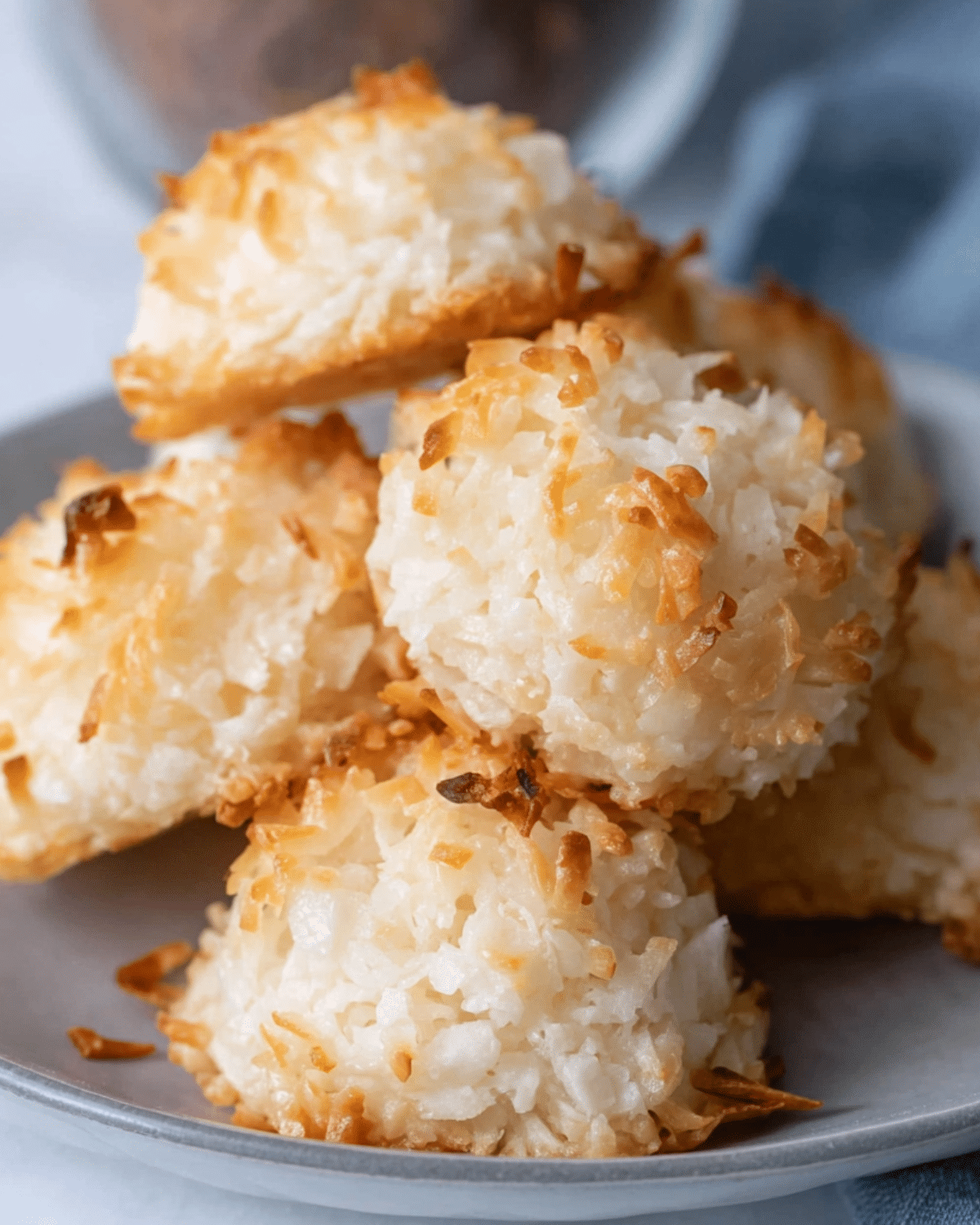
Coconut macaroons are the ultimate treat when you’re craving something sweet, chewy, and just a little crispy. These cookies are made with just a few pantry staples, but the result is something that’s hard to forget. In this guide, we’ll break down everything you need to know to make perfect coconut macaroons—from the ingredients to detailed baking tips, flavor variations, storage ideas, and how to avoid common mistakes. Whether you’re making them for a holiday dessert tray or as a year-round snack, this recipe will become a go-to in your kitchen.
Looking for inspiration? Try our Christmas Cookie Bars Dessert for another festive favorite.
JUMP TO
Table of Contents
What Are Coconut Macaroons?
Coconut macaroons are simple yet decadent cookies known for their chewy centers and slightly crisp, golden edges. Unlike many fancy pastries, they’re easy to make at home and don’t require complicated tools or techniques. But there’s more to these cookies than meets the eye.
Origins and Classic Composition
While coconut macaroons have roots in European baking traditions—particularly Italian and Jewish—they’ve been widely adopted in American kitchens, especially around holidays like Passover and Christmas. Traditionally, they were flourless, making them a popular choice for gluten-free diets long before it became trendy.
A classic macaroon uses four main ingredients: sweetened shredded coconut, egg whites, sugar, and vanilla extract. These elements come together to form a sticky mixture that’s scooped into mounds and baked until golden on the outside. Some recipes even call for dipping or drizzling the cooled cookies in chocolate to elevate their flavor profile.
Discover great ideas like this in our Pecan Pie Dessert Recipe, a perfect companion to your holiday baking.
Difference Between Macarons and Macaroons
One of the most common questions is: Are macarons and macaroons the same? Definitely not.
Macarons are delicate French sandwich cookies made with almond flour and filled with ganache or buttercream. They require precise measurements, careful folding, and perfect piping technique—definitely not beginner-friendly.
Macaroons, on the other hand, are rustic and forgiving. They’re all about texture—chewy and slightly crisp—and flavor. Their coconut base makes them naturally gluten-free and ideal for those avoiding wheat.
If you’re after a no-fuss sweet treat that packs a ton of flavor, coconut macaroons are the way to go.
Check out our Magic Brownie Cookies if you love cookies that strike a perfect balance between chewy and crispy.
Ingredients You Need for Perfect Coconut Macaroons
Making coconut macaroons doesn’t require a trip to a specialty store. In fact, you probably already have the essentials in your pantry. The simplicity of the ingredients is what makes these cookies such a reliable and easy-to-make dessert.
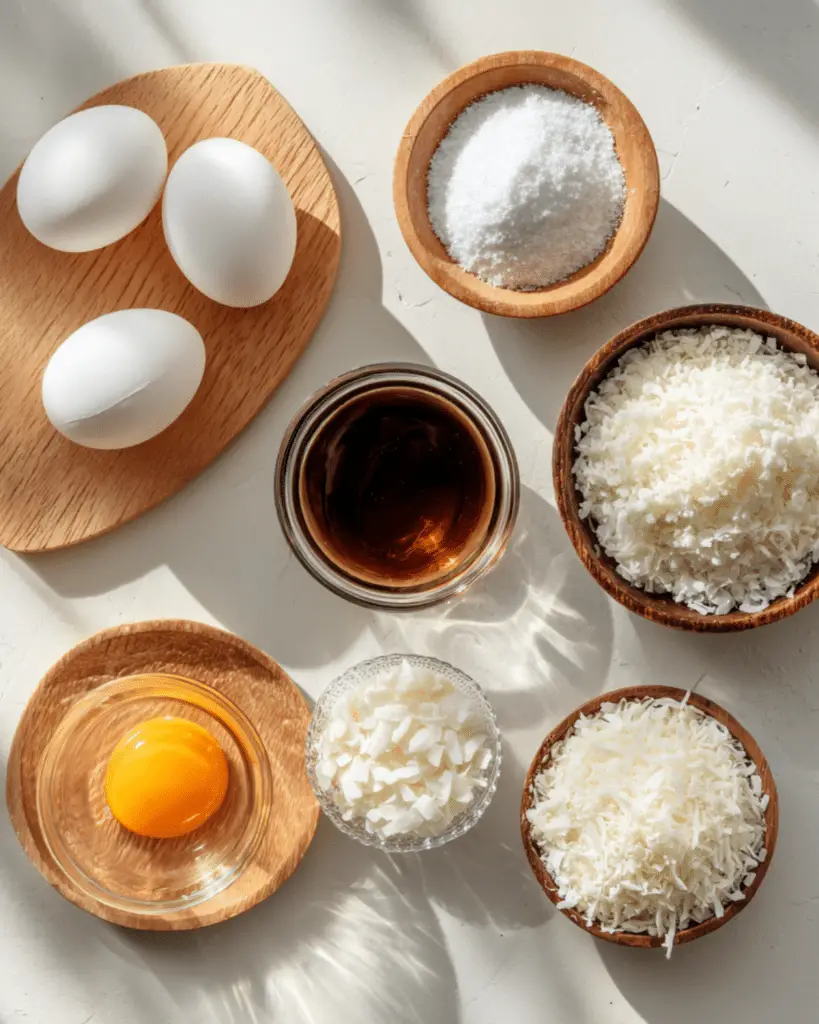
Core 4-Ingredient Base
At the heart of every great coconut macaroon is this simple quartet:
- Sweetened Shredded Coconut – This is the star of the show. It provides that chewy texture and rich coconut flavor. Sweetened coconut is preferred because it adds both moisture and sweetness.
- Egg Whites – Lightly whipped egg whites act as the binder. They help create a crisp exterior and soft interior.
- Granulated Sugar – Adds sweetness and helps create that lightly caramelized crust during baking.
- Vanilla Extract – Enhances the overall flavor with a warm, aromatic note.
That’s it—no flour, no butter, no complicated steps.
Don’t miss our 3-Ingredient Brownies Dessert Recipe if you love ultra-simple desserts with big payoff.
Optional Add-ins & Flavor Boosters
Once you’ve mastered the basic recipe, feel free to get creative:
- Chocolate Chips or Chunks – Stir some into the mixture for a surprise bite of sweetness.
- Almond Extract – Adds a nutty depth, especially when paired with chocolate.
- Lemon or Orange Zest – Brightens the flavor and balances the richness.
- Chopped Nuts – Almonds, pecans, or hazelnuts offer crunch and complexity.
For a richer texture, some bakers substitute part of the egg whites with sweetened condensed milk, though it changes the consistency.
Looking for more unique dessert twists? Check out our Carrot Cake Cookies Tasty Recipe, a soft and spiced alternative treat.
Step-by-Step: How to Make Coconut Macaroons
Ready to bake? Here’s a breakdown of how to go from coconut to cookies in under 30 minutes.
Preparing the Mixture
Start by preheating your oven to 325°F (163°C) and lining a baking sheet with parchment paper.
In a large mixing bowl, combine:
- 4 cups of sweetened shredded coconut
- 4 large egg whites (room temperature)
- ¾ cup granulated sugar
- 1 teaspoon pure vanilla extract
Beat the egg whites and sugar together first until just frothy. This helps the sugar dissolve evenly. Then fold in the coconut and vanilla.
The mixture should be sticky but not runny. If it’s too loose, let it sit for 5–10 minutes to firm up slightly.
Shaping & Baking Techniques
Use a small cookie scoop or two spoons to form mounds of the coconut mixture. Space them about 1 inch apart on your baking sheet.
Baking tip:
Bake for 20–25 minutes or until the tops are golden brown and the edges are crisp. Rotate your pan halfway through to ensure even baking.
Let the macaroons cool on the sheet for 5 minutes, then transfer to a wire rack. They’ll firm up as they cool.
Craving more cozy cookie recipes? Don’t miss our Molasses Cookies Enjoyable Recipe, full of warm spice and chewy goodness.
Dipping or Drizzling in Chocolate
For an extra layer of indulgence, try adding chocolate:
- Drizzle: Melt ½ cup of semi-sweet chocolate chips and use a spoon to zig-zag over cooled cookies.
- Dip: Melt chocolate in a heatproof bowl, then dip the bottoms of the macaroons. Let them set on parchment until firm.
If you prefer a milk or dark chocolate version, adjust to taste. You can also sprinkle sea salt on top of the melted chocolate for contrast.
Tips for Chewy, Golden-Brown Coconut Macaroons
Getting that perfect bite—a golden outside with a moist, chewy middle—takes more than just following a recipe. These expert tips will help you master the texture.
Best Coconut Type for Texture
Not all coconut is created equal. For best results:
- Use sweetened shredded coconut—it has added moisture and a fine texture, which helps bind everything together.
- Avoid desiccated coconut—it’s too dry and can lead to crumbly macaroons unless adjusted with extra moisture.
If you’re going for an ultra-moist center, you can pulse the shredded coconut in a food processor for a finer, more uniform bite.
Preventing Soggy or Dry Macaroons
Soggy bottoms or overbaked tops are usually a result of:
- Overmixing – which breaks down the coconut structure.
- Overbaking – always pull them out when they start to brown on the edges.
- Improper spacing – leave room for air circulation on the baking sheet.
Cool macaroons fully before storing to avoid condensation, which can ruin the crisp exterior.
Make-Ahead & Freezer Tips
You can easily make coconut macaroons ahead of time:
- Fridge – Store in an airtight container for up to 1 week.
- Freezer – Freeze in a single layer, then transfer to a zip bag. They’ll stay fresh for up to 2 months.
Thaw them at room temp for about 30 minutes. To crisp up the outsides again, warm them in a 300°F oven for 5 minutes.
Coconut Macaroon Variations to Try
Once you’ve nailed the classic, it’s time to play with flavors. Here are some tried-and-true variations.
Chocolate-Dipped Macaroons
Probably the most popular twist—dip the bottoms or half the cookie in dark or milk chocolate for that bakery-style look.
Add crushed nuts or coconut on the chocolate before it sets for visual appeal and crunch.
Almond Joy-Inspired Macaroons
Add a whole almond in the center before baking, then dip in dark chocolate. It’s like your favorite candy bar, in cookie form.
Don’t miss our Almond Joy Cookies Recipe if you’re craving a soft-baked treat with the same flavor combo.
Keto or Sugar-Free Macaroons
Going low-carb? Swap sugar for monk fruit sweetener or erythritol, and use unsweetened coconut.
Egg whites and coconut are naturally keto-friendly, so with the right sweetener, it’s easy to adapt.
Serving Ideas and Occasions
Coconut macaroons are great for more than just dessert trays—they shine in every setting.
Holidays, Gifting, and Party Platters
They’re a go-to for Christmas cookie exchanges, Passover treats, or Easter desserts. Their unique flavor and texture make them a standout.
Want to impress with holiday snacks? Check out our Christmas Fudge Cake Dessert Recipe that pairs beautifully with these cookies.
Wrap macaroons in cellophane bags, tie with ribbon, and you’ve got an easy edible gift.
Pairing with Beverages and Desserts
Pair coconut macaroons with:
- Espresso or cappuccino – to balance the sweetness
- Hot chocolate – for a winter treat
- Coconut ice cream – double the flavor hit
They also make a charming addition to dessert boards or as a topping for parfaits.
Troubleshooting Common Coconut Macaroon Issues
Why Are My Macaroons Spreading Too Much?
This usually means your batter is too loose. Try chilling the dough for 30 minutes before scooping. Also, avoid over-whipping the egg whites—frothy, not stiff peaks, is the goal.
Why Are They Too Dry or Crumbly?
This is often from overbaking or using the wrong coconut type. Stick to sweetened shredded coconut, and pull the cookies from the oven as soon as they turn golden at the edges.
If they’re already dry, dipping them in chocolate helps add moisture and richness.
FAQ About Coconut Macaroons
What is the difference between coconut macaroons and macarons?
Coconut macaroons are chewy coconut cookies made with egg whites and no flour. Macarons are delicate French sandwich cookies made with almond flour and meringue. They’re completely different in texture and process.
Why are my coconut macaroons falling apart?
If they crumble, your mixture may be too dry or not mixed thoroughly. Try adjusting the egg white ratio and make sure the coconut is moist and clings together.
How long do coconut macaroons last?
Stored in an airtight container, they last about 5–7 days at room temperature, or up to 2 months in the freezer.
Can I use unsweetened coconut for macaroons?
You can, but you may need to increase the sugar slightly or add a tablespoon of honey or condensed milk to maintain moisture and sweetness.
Conclusion
Coconut macaroons are the perfect balance of chewy and crisp, and they’re delightfully easy to make. Whether you’re baking a big batch for the holidays or just want a simple dessert with bold flavor, this recipe delivers. Try the variations, gift them to loved ones, or enjoy with your favorite coffee—either way, you can’t go wrong.
Discover great ideas like our Chessman Banana Pudding Dessert for more nostalgic and sweet recipes.
PrintCoconut Macaroons

These coconut macaroons are crisp on the outside and chewy on the inside, made with just 4 simple ingredients. Perfect for holidays or a quick sweet treat, they’re easy to make and naturally gluten-free.
- Prep Time: 10 minutes
- Cook Time: 25 minutes
- Total Time: 35 minutes
- Yield: 24 macaroons
- Category: Dessert
- Method: Baking
- Cuisine: American
- Diet: Gluten Free
Ingredients
- 4 cups sweetened shredded coconut
- 4 large egg whites (room temperature)
- 3/4 cup granulated sugar
- 1 teaspoon pure vanilla extract
Instructions
- Preheat your oven to 325°F (163°C). Line a baking sheet with parchment paper.
- In a bowl, beat egg whites and granulated sugar together until frothy.
- Stir in the shredded coconut and vanilla extract until well combined. Let the mixture sit for 5–10 minutes if too loose.
- Using a small cookie scoop or two spoons, drop mounds of the mixture onto the prepared baking sheet.
- Bake for 20–25 minutes, or until tops are golden and edges are crisp. Rotate pan halfway through baking.
- Let cool on the baking sheet for 5 minutes, then transfer to a wire rack to cool completely.
- Optional: Melt chocolate and dip or drizzle over cooled macaroons. Let chocolate set before serving or storing.
Notes
- For best texture, use sweetened shredded coconut.
- Do not overbake—the bottoms should be golden but not burnt.
- Store in an airtight container at room temperature for up to 1 week or freeze for up to 2 months.
- You can substitute almond extract or citrus zest for flavor variations.
- Drizzle or dip in chocolate for extra richness.
Nutrition
- Serving Size: 1 macaroon
- Calories: 110
- Sugar: 10g
- Sodium: 20mg
- Fat: 6g
- Saturated Fat: 5g
- Unsaturated Fat: 1g
- Trans Fat: 0g
- Carbohydrates: 12g
- Fiber: 1g
- Protein: 1g
- Cholesterol: 0mg